The Arbon family was one of the first families in the valley. They were influential in Arbon, starting in 1894. The Arbon home still stands today, on Church Road, west of the LDS Church building. George and his son Joseph came to what was then called Bannock Valley in 1894, and were known to be the first homesteaders to spend the winter in valley. In 1898, because at the great age of fifty-seven George was one of the oldest settlers, the post office was named after him.
FAMILY HISTORY · ARBON AREA
Arbon
From Curlew Valley and Malad, by way of Willard, Utah · earlier England (Graveley, Cambridgeshire)
English-born George Dennis Arbon and his son Joseph were among the first settlers to stay through a valley winter. The post office (1898) — and eventually the whole valley — was named for George, the oldest of the original settlers. With his daughters Esther Davis and Emily Payne and their husbands, the family took up all of Section 23 at the heart of the Arbon floor; the homestead on Church Road still stands beside the LDS church.
- Arrived
- about 1893 (accounts range 1892–1895) date range
- Homesteads and land
- 5 places on the map below ↓
- People recorded
- 13 across 2 generations ↓
- Named for them
- Arbon (post office, later the whole valley)

From the family history
The account first written for this family on ArbonValley.com, kept in full. The chapters after it add what the records and the other family histories tell.
1 minute read
About this account · first posted December 30, 2018
Written for the original ArbonValley.com by Jacob Andersen. Memories and documents quoted in the account belong to the people who wrote them. This is the website publication date, not the date of every event described. References to “today” belong to the original account.
Editorial introductions and navigation were added in September 2026. Original citations remain in the account. How we preserve and annotate the history ↗
Their story
George Arbon was born in January 1840 at Graveley, a Cambridgeshire village in the St Neots district, and sailed for America as a 22-year-old labourer on the John J. Boyd in 1862 — by the family’s account with his brother Charles. Their parents died on the trail west in 1864. In Willard grasshoppers took his crops seven years running; in Malad crickets left him fourteen bushels. He farmed in Curlew Valley and at Almo, where his wife Sarah Annette Nicholas died in 1886, leaving seven children; he never remarried. Sarah’s sister Eunice was Jesse N. Ward’s mother, so the Arbon and Ward pioneers were first cousins.
By his family’s account George came into Bannock Valley from a rented farm at Pleasantview in 1893 and sowed ten acres of rye, and in 1894 brought his motherless children; other accounts say 1892 or 1894, and no record made at the time places an Arbon in the valley before 1898. He and his son Joe were among the first to stay through a winter while others went back to Malad and Samaria: the 1917 county history puts them in a dug-out in 1895–96, and Andrew Jenson wrote in 1906 that the first families stayed through 1896–97. Joe remembered waking to a cabin drifted in to the eaves. Since then, someone has always wintered in the valley.
The family remembered George as a charter member of the Bannock Valley Irrigation Company who helped dig the first ditch from Knox Canyon (his 1921 obituary credits Joe with taking up the ditch project). The settlers’ post office, established in 1898 (1897 in some accounts), was named Arbon in his honour as the oldest man among the original settlers — though he said he could not afford a two-cent stamp that year.
When the township opened to federal entry the family took up the heart of the Arbon floor. George entered his homestead on May 27, 1901 (patent 1909), on the land along Church Road where the farmstead and the present meetinghouse stand; his son-in-law John Payne had entered 240 acres of the same Section 23 three weeks earlier, Joe added 320 acres of desert land beside his father in 1902, and Ed and Esther Davis took up the rest of the section — Esther’s 160 acres by a desert-land entry in her own name (1905). George retired to Joe’s house in Malad about 1912, died there on March 22, 1921, after a stroke, and was buried beside Sarah at Willard.
Joe Arbon married Lizzie Davis in 1898 and proved up his desert-land entry in 1906. He was the first bishop of the Arbon Ward (1908–14) and bishop again from 1925 into the 1930s, so he led the ward when the 1928 church was built; his obituary counts twenty-six years as bishop. He brought hay to snowbound newcomers, played accordion at dances, served as election judge, telephone-company director and wheat-committee man, and rode up Bannock Peak on horseback for his ninetieth birthday. A “Joe Arbon” — he or his son — helped raise the money to replace crank phones in 1965.
George’s other daughters went their own ways: Mayme (Martha Mary Ann) probably homesteaded beside her cousin Jesse Ward and married her neighbour Jerry Baker; Nancy lived and died at Almo; Maggie (Margaret) King settled in southern Alberta in 1896; Eva married Ezra Andersen. Joe’s son Joseph G. Arbon and his wife Edna Bailey, a Valley View teacher and Arbon postmaster, ran the ranch, wintering in Pocatello, until about 1974.
Sources: Arbon · George Dennis Arbon · Joseph Nicholas Arbon · Joseph George Arbon · Arbon (area history) · Davis · Andrew "Otto" Andersen · James R. Bailey
Where they came from
- Graveley, Cambridgeshire, England (St Neots registration district)
- Ship John J. Boyd, Liverpool to New York; Salt Lake Valley1862
- Willard, Utah1862–69
- Malad, Idahoby 1870
- Curlew Valley near Snowville1880; 1891
- Almo, Idaho1883–86
- Pleasantview, near Samaria (a rented farm)about 1887–94
- Bannock Valley1890s (1892–95 by different accounts)
Sources: George Dennis Arbon · Saints by Sea: George Arbon, 22, labourer, John J. Boyd, Liverpool April 23 – New York June 1, 1862 · 1870 U.S. census, Malad City, Oneida County, Idaho Territory, page 37 (George Arbon household, dwelling 2) · 1880 U.S. census, Curlew precinct, Box Elder County, Utah, ED 7 (George Arbon household, dwelling 27) · American Falls Press, 1921-04-01, page 1 (obituary of George Arbon: death, survivors, burial plan, life story)
The people
13 people of the Arbon family on the valley map, household by household, and 3 histories of their own in the archive. Names open their histories; portraits open in the family album.
The households 5
Each with the people who married in, and their children and grandchildren below, oldest first.
George Dennis Arbon
1840–1921
Patriarch; namesake of the valley
More about George
English farm labourer turned Utah and Idaho pioneer whose crops were lost to grasshoppers and crickets before he came to Bannock Valley. A widower from 1886, he raised seven children with the help of his eldest daughter Emily. He retired to his son Joe’s house in Malad about 1912 and died there in March 1921, aged 81, after a stroke.
Sarah Annette Nicholas Arbon 1850–1886
Married 1865 · sister of Eunice Nicholas Ward, Jesse N. Ward’s mother
Nancy Eunice Arbon Jones
1868–1908
Second daughter of George Dennis Arbon; wife of Stephen Henry Jones (married 1893)
More about Nancy
Lived and died at Almo and never lived in Bannock Valley. Her young son Hosea was in his aunt Emily Payne’s household at Arbon in 1910, and Nancy’s widower, Stephen H. Jones, probably the same man, later married Emily.
Margaret Ellen or Helen “Maggie” Arbon King
1871–1955
Third daughter of George Dennis Arbon; wife of Thomas Owen King III (married 1890)
More about Maggie
Named “Marg’t Ellen” in the 1880 census and Margaret Helen in family records. She married Thomas Owen King III in 1890 and, by her obituary, pioneered in southern Alberta from 1896, settling at Raymond, where she raised eight children. As “Mrs. Maggie King of Canada” she came back for her father’s funeral in 1921 and visited her sisters at Arbon. Her Kings are probably not related to the Summit and Buist King families.

Joseph Nicholas Arbon
1875–1972
Only son of George Arbon; first cousin of Jesse Ward
More about Joseph
Wintered with his father in a cabin drifted to the eaves. A “progressive man,” he dug and maintained early canals and bought a gasoline tractor in 1928. He was the first bishop of the Arbon Ward (1908–14) and bishop again from 1925 into the 1930s — about 26 years by his obituary’s count — and served as election clerk and judge, telephone-company director and wheat-committee man. He wintered in Malad about 1912–22 and later lived in Pocatello. At about ninety he rode a horse up Bannock Peak.
Elizabeth “Lizzie” Davis Arbon 1879–1957
Married 1898 · sister of Ed Davis
Arvilla Hughes McKay Arbon 1910–1987
Married 1958
Delta Arbon Harmon 1902–1987
Wife of Dr. Frank Carlyle Harmon (married 1929)
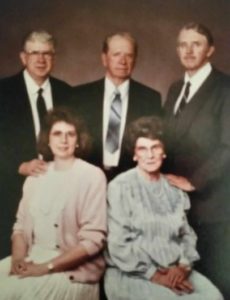
Joseph George Arbon 1907–2000
Married Edna Kerr Bailey Arbon (1929)
Cardon Arbon 1911–1911
Infant son of Joseph N. and Lizzie Arbon
Harold Davis Arbon 1919–2019
Martha Mary Ann “Mayme” Arbon Johnston Baker
1876–1953
Fourth daughter of George Dennis Arbon; wife of Charles A. Johnston (married 1895) and of the Arbon rancher Jerry Baker Jr. (married probably 1918)
More about Mayme
Married Charles A. Johnston at Almo in 1895; their children were Stella, Ethel and Charley. As “Mrs. Mayme Arbon” she had a home at Arbon by 1915, and she was probably the “Mary Ann Arbon” who patented 160 acres in Section 35 in July 1915 — one of the valley’s women homesteaders. She then married her neighbour Jerry Baker Jr. of Mendon (at Ogden in January 1918, by his obituary); they farmed at Arbon until about 1930 and later, by his obituary, ran the Carlyle hotel in Pocatello. Her daughter Stella married Melvin K. Bailey of Arbon.
Homesteads and land
5 places the Arbon family took up or held, 1893–1937, placed from the land patents, the entry registers and the family accounts.
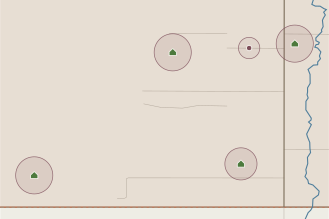 12345
George Arbon homestead, Church Road
On Church Road just west of the LDS church. The house, a large horse barn and outbuildings survive; the foundation of the original log cabin lies between the house and the church. The farmstead stands on the NE¼NW¼ of Section 23 (T11S R33E), part of George Arbon’s 1901 homestead; the mapped point lies on Church Road, the forty’s south line, a little south of the buildings.
Joe Arbon’s desert land (entry 1902)
Joseph N. Arbon’s 320 acres of desert land — the SE¼SE¼ of Sec. 14, the S½SW¼ of Sec. 13 and the NW¼ and NW¼SW¼ of Sec. 24, T11S R33E — wrapping around the east side of his father George’s homestead and 1911 cash forty. Entered May 16, 1902 (desert-land entry 3363), proved up in February 1906 and patented August 20, 1907; the irrigated core of the Arbon ranch.
Eva’s homestead entry as Sarah Arbon Bird (1904; relinquished 1909)
The 160 acres entered on April 14, 1904, by “Sarah Arbon Bird” of Arbon, probably George Arbon’s youngest daughter Eva, half a year before she married Ezra Andersen: the E½NE¼ of Sec. 21 and the S½NW¼ of Sec. 22, T11S R33E, about a mile west of her father’s homestead on Church Road. The entry was relinquished on April 19, 1909; parts of the land were later patented by John J. Infanger and Daniel V. Roberts.
Mayme Arbon’s homestead (entry about 1912; patent 1915)
The NW¼ of Sec. 35, T11S R33E, patented on July 7, 1915, to “Mary Ann Arbon” (indexed “Arbor”), very probably George Arbon’s daughter Mayme, who was living at Arbon under her maiden name in 1915–16. It adjoined Jerry Baker’s quarter on the east (later the Ward headquarters) and Jesse Ward’s desert land to the south. The entry was probably made about 1911–12; her house burned in July 1916.
Joseph G. Arbon’s stock-raising homestead (about 1937; patent 1940)
Joseph G. Arbon’s 640.86-acre stock-raising homestead — all of fractional Sec. 31 and the NW¼ of Sec. 32, T11S R33E — in the foothills at the south-west corner of the Arbon township, patented on June 10, 1940. Range land for the third-generation Arbon ranch.
The land patents
The federal patents that made the homesteads theirs, from the General Land Office records.
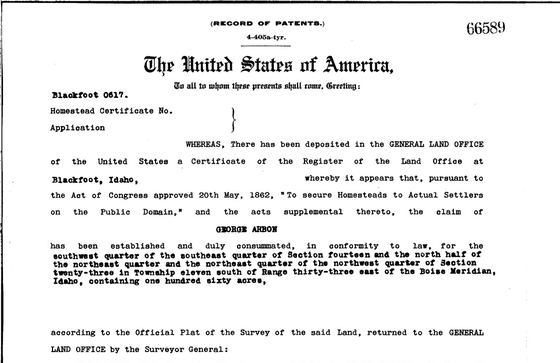
95 dates in the family’s history
Every date the valley map shows when you follow the Arbon family, era by era: the most telling of each era first, the rest a click away. Dates keep the sources’ own wording.
Homestead or landFamily historyEventValley firstTragedy
Before Homesteading
A Shoshone and Bannock homeland; trails, travelers and cattle range.
April 23–June 1, 1862Family history
George sails for America
George Arbon, 22 and listed as a labourer, sailed from Liverpool on the John J. Boyd on April 23, 1862, and landed at New York on June 1. By the family’s account he crossed the plains that summer and settled at Willard, Utah, that autumn.
August 12, 1870Family history
Farming at Malad City
The 1870 census found George, 29, farming at Malad City with his wife Sarah and their daughters Emma (Emily) and Nancy. His sister Esther probably lived next door.
George Dennis Arbon, Sarah Annette Nicholas Arbon, Nancy Eunice Arbon Jones
June 1880Family history
In the Curlew Valley
The 1880 census found George and Sarah Arbon with six children in Curlew precinct, Box Elder County, Utah, next door to George’s brother Charles.
George Dennis Arbon, Sarah Annette Nicholas Arbon, Nancy Eunice Arbon Jones, Margaret Ellen or Helen “Maggie” Arbon King and 2 more
1882 and 1883Family history
Election judge at Curlew
George Arbon was named a judge of election for Curlew precinct, Box Elder County, in 1882 and again in 1883.
Early Claims
Possessory claims and water rights before the valley opened.
1885–1894 by different accounts; earliest record 1892Valley first
The first settlers
Who settled the valley first is one of the oldest questions in its history, and the records settle only part of it.
about 1887–89Family history
A rented farm at Pleasantview
After three dry years at Almo, George moved the family to a rented farm at Pleasantview, near Samaria. It was there, by the family’s account, that he heard of Bannock Valley.
late June 1892 (family tradition)Event
The Andersens first see Bannock Valley
By family tradition, Andrew Andersen and his sons Otto and John came from Mendon in Cache Valley in a light covered wagon — almost to Snowville, up Blue Creek Valley, then north into the valley — and camped near a spring in a green meadow. Land in Cache Valley had become scarce; Andrew decided to help his sons homestead here. They found George Arbon already located to the north-west of the land they staked. No record made at the time mentions the trip, and George Andersen’s memoir places his father’s search for land after the Mendon store fire of October 1893.
1890s Settlement
Homesteads, the first ditch, and the first winters.
1893 (claims staked; federal entries from 1901)Event
Squatters’ claims staked
The Arbon area timeline marks 1893 as the year homesteading opened. The townships were not yet surveyed, so the settlers of 1893 staked squatters’ claims — the 1917 valley history has J. N. Arbon, Ed Davis, D. J. Bowen and others staking land that year — and could file at the land office only after the plats were opened in 1901. Filing on 160 acres then cost $16, followed by five years of fencing, breaking ground and building a cabin to prove up. The first families — Andersens, Daniels, Arbons and Evans among them — lived in wagon boxes, tents or dugouts.
August 1893Event
Irrigation company organized in Samaria
The earliest meeting of what became the Bannock Valley Irrigation Company took place in Samaria. Its purpose was to own and control the water of Knox Creek through dams, ditches, pipes, flumes and reservoirs. Members pooled money, labor, equipment and horse teams, and kept detailed minutes — down to the pay for each man’s work and team.
1893–1895 (accounts differ); decreed priority July 24, 1897Event
A mile-and-a-half ditch from Knox Canyon
Working together, the settlers dug a ditch about one and a half miles long from the mouth of Knox Canyon to land they held by squatter’s rights. The Davis account dates it to 1893, the Arbon area history to 1894, and the George Arbon biography to 1895. In later years it grew to several miles — about seven by 1906, when Andrew Jenson described it — and its Knox Canyon Creek water right carries a decreed priority of July 24, 1897.
1894Event
Families come for the summer
Spring 1894 brought back the Samaria homesteaders and others from Cache Valley, including the Andersen brothers on the east side of the Arbon area. Ed and Esther Arbon Davis came with their baby, and George Arbon brought his motherless children. Families shared what they had: wire to fence small fields, D. J. Bowen’s Osborne dropper to cut grain, and a thresher brought from Samaria through Mine Canyon.
winter 1893–94, 1894–95 or 1895–96 (accounts differ)Event
George and Joe Arbon stay the winter
Most settlers went back to Malad, Samaria or Cache Valley for the winter, but George Arbon and his son Joe stayed — by most accounts the first to winter in the valley. Joe remembered blizzards lasting a day, snow drifted to the eaves, and prying the door open to breathe after the chimney smoked. The 1917 county history says they wintered in a dug-out in 1895–96, and Andrew Jenson wrote in 1906 that the first families stayed through 1896–97. Since then the valley has never been completely vacated in winter.
March 18, 1895Event
Bannock Valley Irrigation Company filed
The company was formally filed in Samaria. Edward Davis held 4⅗ shares and Lorenzo Evans four; George Arbon was a charter member. Within a few years the canal from Knox Canyon reached the Bowen place on present Bowen Lane.
Show 6 more from these years
1893 (accounts range 1892–1895)Event
George Arbon takes up land
By his family’s account George Dennis Arbon, an English immigrant who had farmed at Willard, Malad, Curlew Valley and Almo, came into Bannock Valley from a rented farm at Pleasantview; that fall he plowed new ground and sowed ten acres of rye, cut for hay the next year. His son Joseph worked beside him.
1893 (accounts range 1892–1895)Homestead or land
George Arbon homestead, Church Road
1896Family history
Maggie King’s family goes to Alberta
George’s daughter Margaret (Maggie) and her husband Thomas Owen King III went to pioneer in southern Alberta in 1896, later settling at Raymond. She came back to Arbon to visit her sisters in 1921.
Margaret Ellen or Helen “Maggie” Arbon King
1896Event
One header for the whole valley
After poor first crops, 1896 brought a good harvest. Ed Davis, D. J. Bowen, James Bailey, Lorenzo Evans and Joseph Arbon pooled $263 for a ten-foot Hodges header, which cut all the grain in the valley that year.
1898 or 1910 (accounts differ); an incorporated company by 1917Event
Arbon Irrigation Company
The Arbon area history dates the Arbon (Valley) Irrigation Company to 1898 — essentially the same organization as the Bannock Valley company, it says, run by the same early homesteaders and later joined by others, including Davis, Bailey, Hawkins, Williams, Ward, Arbon, Bowen, Roderick and Evans. The Edward Davis biography says it was formed in 1910, with Davis a charter member holding fifteen shares. Records show it was an incorporated company by October 1917, when it was on the state’s list of corporations behind in their licence tax, and a 1923 court notice lists three shares of its stock. The two company names have separate federal canal files, so it may have been a successor or a second company.
1898 (postmaster appointed June 21; office opened in August)Event
A post office named Arbon
In January 1898 the Post Office Department drew up a location paper for a proposed office at “Mountain Side,” to be called Arbon, serving about seventy people by special supply from Malad City, thirty-five miles away; the original ArbonValley.com accounts say “Mountain Side” was rejected as too long. D. J. Bowen signed the paper as proposed postmaster, was appointed on June 21, 1898, and opened the office that August. Every early account says it was named for George Arbon, the oldest of the first settlers — though he said he was too poor that year to buy a two-cent stamp. Mail came about weekly from Malad over Rocky Ridge, carried at first by the settlers in turn. The first mail out, on October 7, 1898, was three letters.
Early 1900s Growth
Schools, churches, stores and post offices in every area.
August 19, 1900Event
Arbon LDS Branch organized
On August 19, 1900, about ten families and a few single men were organized as the Arbon Branch of the Samaria Ward, Malad Stake, with D. J. Bowen as presiding elder — by the original ArbonValley.com and family accounts, in Bowen’s home. J. R. Bailey was the first Sunday School superintendent, with Ed Davis and Joe Arbon as assistants. It was a branch, not yet a ward: Arbon became a ward in 1908. Meetings moved among private homes, and for decades church was held only in the summer months, when families were in the valley.
1901–02 (shared log building); March 1911 (first built for a congregation)Valley first
The first meetinghouses
For ten years the valley's only meeting place was the shared log schoolhouse, and the first building raised for a congregation was probably the T-shaped log meetinghouse at the north end, finished in March 1911.
March–September 1901Event
The first homestead entries
Once the townships were surveyed, the settlers who had squatted on the valley floor since the 1890s filed at the Blackfoot land office. The register dates the first entries: Jennett Daniels Price and Henry Daniels on March 12, 1901, at West Fork, then Donum and Thomas D. Daniels later that month; Charles A. Bailey on March 28, the first on the Arbon floor; D. B. Evans and Julius Abter in April; John Payne’s and Jane Dalton’s desert-land claims in May; Thomas Gibbons, the Bailey brothers, George Arbon, David T. Davis and Jesse Ward’s desert land in late May; D. J. Bowen and J. A. R. Gibbons on June 6 and William Arnn on June 8; the first Summit entries — Joseph T. Wood, Peter Larsen of Mendon and Frederick J. Manning — on July 2; and John C. and Otto Andersen on September 6. Most gave their residence as “Arbon, Oneida.”
1901–1902 (accounts differ)Event
A log building for school, church and dances
The community hauled logs from the canyons and built a 20×36-foot building “by everyone, regardless of church affiliation.” The original ArbonValley.com accounts put it beside the George Arbon homestead on Church Road, where the present meetinghouse stands, on land they say Lorenzo and Chloa Bailey gave; the Power County history puts the 1902 log school in Section 12 instead. It served as Valley View School, meetinghouse, dance hall and public meeting place, and was Oneida County School District 46 by 1907; around 1904 the logs were covered with lumber.
1902Homestead or land
Joe Arbon’s desert land (entry 1902)
Joseph N. Arbon’s 320 acres of desert land — the SE¼SE¼ of Sec. 14, the S½SW¼ of Sec. 13 and the NW¼ and NW¼SW¼ of Sec. 24, T11S R33E — wrapping around the east side of his father George’s homestead and 1911 cash forty. Entered May 16, 1902 (desert-land entry 3363), proved up in February 1906 and patented August 20, 1907; the irrigated core of the Arbon ranch.
late January 1911 (day uncertain)Event
Three children lost at a flooded crossing
After a January thaw and Chinook wind filled every creek, the Ezra Taft Andersen and Dell C. Dalton families were going home together when their sleigh or wagon box overturned at a flooded crossing. Mr. Dalton lifted it off the others; Mrs. Dalton and Eva Andersen held children by their feet. Two Dalton children (probably George, six or seven, and the infant Dora) and Nicholas Andersen — five by his recorded birth date (four in the May 1910 census), six by the family account — were swept away and found downstream the next morning. The archive says they were buried in the Pauline Cemetery; Find a Grave and a memorial stone place them in the Arbon Valley Cemetery.
Show 25 more from these years
fall 1900Event
The first election
The valley’s first election was held at George Arbon’s place in the fall of 1900, with George Arbon, D. J. Bowen and a Daniels — probably Donum — as judges.
1901–1913 (entries 1901–1905; patents 1907–1913)Event
The Arbon kin take up Section 23
On May 3, 1901, John Payne, George Arbon’s son-in-law, made a desert-land entry on the SE¼ and S½NE¼ of Section 23 (T11S R33E), giving Arbon as his residence; on May 27 George Arbon entered his homestead on the NE¼NW¼ and N½NE¼ of the section, with a forty in Section 14. Joseph N. Arbon’s 320-acre desert-land entry beside his father followed in May 1902, Ed Davis’s homestead in September 1905 and Esther Davis’s own desert-land entry in December 1905. When the patents were issued, from 1907 to 1913, every forty in Section 23 belonged to George Arbon, his daughter Esther and her husband Ed Davis, or his son-in-law John Payne.
1903Family history
Joe Arbon answers a mission call
Writing from Arbon to the First Presidency in 1903, Joseph Arbon said he would accept a mission call if he had more education. He was not called.
entry on April 14, 1904Homestead or land
Eva’s homestead entry as Sarah Arbon Bird (1904; relinquished 1909)
April 14, 1904Family history
Eva files on a homestead of her own
As “Sarah Arbon Bird” of Arbon, George’s youngest daughter Eva very probably entered 160 acres a mile or two west of the family land, on Sections 21 and 22. The entry was relinquished in April 1909 and never patented in her name.
February 1906Family history
Joe Arbon proves up his desert land
Joseph made final proof on the 320 acres of desert land he had entered beside his father’s homestead in 1902, having brought water to it and cultivated it. The patent followed on August 20, 1907.
July 19, 1906Event
Jesse Ward proves up his desert-land claim
On July 19, 1906, Jesse N. Ward received the final certificate on the 320-acre desert-land claim he had entered in May 1901 (Secs. 34–35 T11S R33E), having shown the required irrigation and cultivation; the patent followed on September 25, 1907. Joseph N. Arbon proved up the same year; his desert-land patent is the serial just before Jesse’s.
about 1907 (family memory); documented 1909–1914Event
Aunt Emmy’s country store
Five-year-old Delta Arbon and her cousin Orval Davis walked “down to our Aunt Emmy’s store,” a country store where the candy was kept in open buckets. Aunt Emmy was very probably Emily Annette Arbon Payne, aunt to them both. John Payne hauled supplies “for his store” from Pocatello in 1909 and 1911, travellers stayed at “the Payne hotel,” and Polk’s 1914 gazetteer lists Mrs. E. A. Payne’s general store at Arbon.
November 1907Family history
A 2,450-bushel harvest
Arbon men in American Falls reported that Joe Arbon had threshed 2,450 bushels from his 1907 dry-farm crop.
July 19, 1908 (bishop ordained December 27, 1908)Event
Arbon becomes a ward
After seven years as a branch — of the Samaria Ward and, from 1907, of the Holbrook Ward under presiding elder Joseph N. Arbon — Arbon was organized as a ward of the Malad Stake on July 19, 1908, with Joseph N. Arbon as its first bishop. It joined the new Curlew Stake in 1915.
September 30, 1908Family history
Grain judge at Farmers’ Day
Joseph Arbon of Arbon was named the grain judge for the Farmers’ Day exhibits of September 30, 1908.
November 1908 – 1910Event
A campaign for settlers
In November 1908 the American Falls Press began a campaign for settlers, advertising the valley as having had no crop failure. An Arbon committee of John Payne, Adam Affleck and Lorenzo Evans answered homeseekers’ letters; J. R. Bailey, Julius Abter and Otto Andersen laid out a new road to American Falls; and Bert Evans, David Roderick and Bishop Arbon called a December meeting on dividing Oneida County. Twenty-eight homesteads were taken between November 1908 and March 1909, families from Dayton, Washington, filed after a copy of the Press reached them, and within about two years nearly all the vacant land was taken.
November 1908Family history
In the wheat caravan to Michaud
Joe Arbon drove one of sixteen wagons that hauled Arbon wheat to the railroad at Michaud, a show of the valley’s crop during the American Falls campaign for settlers.
March 1909Family history
Plans for a townsite
The Arbon news column reported that Bishop Arbon was arranging to lay out a townsite, as homesteaders filled the valley.
Winter of 1909–10 (the original ArbonValley.com: 1909)Event
Neighbors rescue a Kentucky family
The Nunnelleys, newly arrived from Kentucky, ran out of feed in a severe winter; their horses would only lie down in the deep snow. Joe Arbon came with a load of hay and Ed Davis with groceries. “They stayed all night and we danced and sang.”
May 1910Family history
Three generations at Arbon
The 1910 census found Joseph and Lizzie Arbon at Arbon with Delta and young Joseph G., and George, then 70, living with them.
Joseph Nicholas Arbon, Elizabeth “Lizzie” Davis Arbon, Delta Arbon Harmon, Joseph George Arbon and 1 more
by August 1911Valley first
The first village blacksmith and butcher
By August 1911 the Arbon floor had what the paper called "our village blacksmith," Chapman, and a village butcher.
January 14, 1911Event
The valley votes to join a new county
The county-division question raised at the December 1908 meeting was settled locally on January 14, 1911, when the valley voted 109 to 30 to be included in the new county proposed to be carved from Oneida — the bill that created Power County two years later. G. S. Butler canvassed every household, Jewell Horton was clerk of the meeting, and Julius Abter had moved in December 1910 that the vote be final.
April 1911Family history
Clerk of election
Joseph Arbon served as clerk of election at Arbon for an Oneida County special election.
June 1, 1911Family history
George buys another forty
George Arbon received a patent for a 40-acre cash purchase, the SW¼SW¼ of Section 24, beside Joseph’s desert land.
September 1911Family history
A 3,256-bushel crop
Joseph threshed 3,256 bushels in 1911, with yields of 17 to 34 bushels an acre.
1912Homestead or land
Mayme Arbon’s homestead (entry about 1912; patent 1915)
Martha Mary Ann “Mayme” Arbon Johnston Baker
about 1912Family history
A winter home in Malad
About 1912 George retired to a house Joseph owned in Malad, and the family spent its winters there until about 1922. Granddaughter Delta kept house for him.
George Dennis Arbon, Joseph Nicholas Arbon, Delta Arbon Harmon
August 1912Family history
Running for county commissioner
J. N. Arbon was among the candidates for Oneida County commissioner in the August 1912 primary; the outcome is not known.
October 1912Family history
Delegate to the Dry Farming Congress
Joseph Arbon was an Idaho delegate to the International Dry Farming Congress held at Lethbridge, Alberta.
Community Development
A new county, roads and phones — and the first departures.
September 1913Family history
Joe and Lizzie named congress delegates
Joseph was again named a delegate to the dry-farming congress, and Lizzie a delegate to the International Congress of Farm Women.
not dated; practised by 1916Valley first
Summer fallowing comes to the valley
Two families each credit their own pioneer with introducing summer fallowing, resting a field for a year to store moisture, the practice that made dry farming pay.
1920s–1940s (undated memories)Tragedy
May Davis’s close calls
Runaway horses over the car, a baby under a wagon wheel, a neighbour bleeding from a broken jug and her own daughter under a buggy wheel: May Davis remembered them all.
December 12, 1924Tragedy
John Payne and Martha Tuttle
A coroner’s jury found that John Henry Payne, the Arbon storekeeper and former justice of the peace, shot Mrs. Martha Tuttle and then himself.
1928 (dedicated 1928, 1929 or 1939; accounts differ)Event
A new Arbon church house
A larger church was built across the road from the original log building, where the Arbon Pavilion now stands — probably on Esther Davis’s forty in Section 23. Bishop Joe (Joseph N.) Arbon, in his second term as bishop, oversaw its construction at a cost of about $11,000; members of every faith contributed time, labor and money, and it hosted community events for decades.
1928 – about 1941Event
From horses to tractors
Families who had harnessed up to eighteen horses a day changed over: the Arbons bought their first gasoline tractor in 1928, the Bolingbrokes a Caterpillar in the early 1930s, the Lusks traded their horses for a Model M crawler in 1937 ($1,650), and Mark Andersen’s family bought its first tractor around 1941.
Show 20 more from these years
September 6, 1913Event
The Falls-Bannock Telephone Company
After an American Falls Board of Trade campaign, seventeen valley households organized their own telephone company at the Central school on September 6, 1913, with [D.] J. Bowen as president, D. B. Ripley vice-president, William Allard secretary and J. E. Keeler and T. B. Evans directors; by 1914 it was the Falls-Bannock Telephone Co., and its 1916 directors were J. R. Bailey, J. N. Arbon, George Houk, T. B. Evans and L. B. Evans. Susannah Evans ran the valley’s telephone exchange from the Evans home for about twenty-five years.
1914Family history
End of the first bishopric
Joseph was released as bishop of the Arbon Ward in 1914 after six years, and his brother-in-law Ed Davis succeeded him.
January 24–November 15, 1915Event
New wards and the Curlew Stake
In 1915 the south-end branches became wards and Arbon changed stakes. The Buist Branch became the Mount View Ward on January 24 (Bishop Archibald S. Hall); the Curlew Stake was organized at Snowville on May 17 from Malad Stake units including the Arbon and Mount View wards and the Canyon Branch; and the Canyon Branch became the Summit Ward on November 15 (Bishop Joseph Taft Benson). The Meadow and Crystal units belonged to the Pocatello Stake.
July 7, 1915Family history
Mayme’s homestead patent
A homestead patent for the NW¼ of Section 35, beside the Baker and Ward land, was issued to “Mary Ann Arbon”, very probably George’s daughter Mayme. She had probably entered the land about 1911–12.
Martha Mary Ann “Mayme” Arbon Johnston Baker
by 1915–16Family history
Mayme and Charles Johnston part
By January 1916 Mayme was going by her own name, as Mrs. Mayme Arbon, and she and Charles A. Johnston, her husband since 1895, had parted. No divorce record has been found.
Martha Mary Ann “Mayme” Arbon Johnston Baker
July 1916Tragedy
Mayme Arbon’s home burns
George Arbon’s daughter Mayme, living at Arbon under her maiden name, lost her house to fire in July 1916; passers-by saved the furnishings.
Martha Mary Ann “Mayme” Arbon Johnston Baker
winter 1916–17Tragedy
The stock-killing winter of 1916–17
Hay ran out and deep snow killed stock across the Rockland and Arbon valleys; men carried hay on horseback to horses stranded in the hills.
April 1916Family history
Farmers’ institute committee
Joseph Arbon, still called Bishop Arbon, sat with William Allard and J. D. Dawson on Arbon’s committee for the 1916 farmers’ institute.
June 1916Event
Bishop Arbon moves the Dell Dalton house
In June 1916 Joseph N. Arbon bought “the Dell Dalton house” and moved it to his place about two miles south of the old Dalton place. The Daltons had sold their farm in October 1915 and left the valley soon after a brief return in May 1916; the item does not say whether the house was Dell C. Dalton’s or his late father’s.
August 1916Family history
Judge of election
The Power County commissioners named Joseph a judge of election for Arbon precinct, with T. B. Evans and James Payne.
winters of 1916–17, 1919–20 and 1921–22Family history
The Baileys winter at the Arbon ranch
Mayme’s daughter Stella and her husband Melvin Bailey spent three winters at the Joe Arbon ranch while the Arbons wintered in Malad.
1917–18Family history
Farm bureau and the Bailey estate
Joseph served on the county farm bureau’s Arbon committee in 1917, and as administrator of the estate of the homesteader Charles A. Bailey in 1917–18.
January 1920Family history
Wintering in Malad
The January 1920 census found Joseph’s household in its own house in Malad: Joseph, Lizzie, Delta, Joseph G., baby Harold and George, then 80.
Joseph Nicholas Arbon, Elizabeth “Lizzie” Davis Arbon, Delta Arbon Harmon, Joseph George Arbon and 2 more
January 1920Family history
Mayme on the Baker farm
In January 1920 Mayme, now Mrs. Jerry Baker, was living on the Baker farm at Arbon with her Johnston children Ethel and Charley.
Martha Mary Ann “Mayme” Arbon Johnston Baker
May 1920Family history
The Ripleys’ farewell
When the Ripleys left the valley, Lizzie Arbon chaired the committee for their farewell reception at Central Hall, and Joseph gave the address.
Christmas Eve 1920 (as remembered; possibly another year)Event
Santa in a blizzard
The Joe Arbon family invited neighbors for Christmas Eve. A blizzard blew in, and “Santa (Ezra Andersen) had a hard time getting there with the children’s toys.” The guests stayed the night and dug themselves out at daylight.
1925 (to between 1931 and 1938)Family history
Bishop again
Joseph became bishop of the Arbon Ward again in 1925, succeeding T. S. Toyn, and was still serving at the end of 1930. His second term ended sometime before May 1938.
about 1925–27Family history
Delta Arbon’s mission
Delta Arbon served as a Latter-day Saint missionary in California, in the San Jose district, about 1925–27.
Delta Arbon Harmon
autumn 1925Family history
Edna Bailey teaches at Valley View
The county superintendent’s report of October 1925 lists Miss Edna Bailey as teacher of the Valley View school (District 11). Family accounts say she taught there for several terms.
November 23, 1925Family history
Edna Bailey, Arbon postmaster
Edna Bailey was appointed postmaster of Arbon and kept the office until November 1928, when Mary A. Bullock took over.
Depression & Change
Drought, closures, tractors, electricity, the reservation boundary.
February 1930Family history
Grain-marketing committee
J. N. Arbon was named to an organizing committee for co-operative grain marketing.
April 1930Family history
Two generations on the ranch
The 1930 census found Joseph and Lizzie at Arbon with Harold and with Joseph G. and Edna, who shared the home for about ten years.
Joseph Nicholas Arbon, Elizabeth “Lizzie” Davis Arbon, Harold Davis Arbon, Joseph George Arbon and 1 more
1932–1933Valley first
The first 4-H club and Grange
The earliest 4-H club found in the valley was at Pauline in 1932, and in 1933 William Allard chaired the committee that organized the Arbon Valley Grange.
1935 and 1936Family history
Buying breeding rams
A “Joe Arbon of Arbon” — Joseph or his son Joseph G. — bought pens of breeding rams at the autumn sales of 1935 and 1936.
1937Homestead or land
Joseph G. Arbon’s stock-raising homestead (about 1937; patent 1940)
Joseph G. Arbon’s 640.86-acre stock-raising homestead — all of fractional Sec. 31 and the NW¼ of Sec. 32, T11S R33E — in the foothills at the south-west corner of the Arbon township, patented on June 10, 1940. Range land for the third-generation Arbon ranch.
December 26, 1948 – March 22, 1949Event
The winter of 1948–49
A seventeen-day storm alternated south winds with west blizzards; families were snowed in from the day after Christmas until March 22. Mail was flown from Pocatello and dropped in a field, rural carrier Sod Williams delivered it on horseback, and hay was airlifted to ranchers who could not reach their stacks.
Show 7 more from these years
about 1930Family history
The Carlyle hotel in Pocatello
About 1930 Mayme and Jerry Baker left their Arbon farm for Pocatello, where Jerry bought the Carlyle hotel and they ran it through the 1930s.
Martha Mary Ann “Mayme” Arbon Johnston Baker
1933–1943Event
New Deal farm committees and the grange
From 1933 the county agent’s wheat-allotment committees of the Agricultural Adjustment program were the valley’s main civic bodies: for Arbon (Roy Lindley, J. N. Arbon, John Anderson and Ed Davis; in 1934 J. N. Arbon, J. L. Payne and Frank Phelps), for Pauline (E. C. England, William Allard and M. V. Tallon), for the reservation side (Perry Lusk), for Crystal (Norman Hayden, Chester Smith and Elva Thacker) and, on the Oneida side, for Summit (J. P. Sorensen, J. I. Nunnelley and I. Y. Rush) and Buist (H. S. Bird), with R. H. Willie also serving. The Arbon Valley Grange No. 349 kept records from 1934 to 1939. Chauncey C. Payne became county AAA chairman in 1941 and War Board chairman in 1942; Norman Hayden chaired the Arbon–Crystal planning committee in 1941–42, with Allard as secretary and Waldo Evans among its members.
June 1936Family history
The Arbon family reunion
“Bishop J. N. Arbon of Arbon” was in charge of the program when the Arbon Family Association met at Snowville, where his father and uncle had once farmed.
May 14–16, 1938Tragedy
Dale Orison struck by a car at Malad
Twenty-two-year-old Dale Orison of Arbon was struck by a car while crossing a street in Malad and died two days later.
February 11, 1940Event
The Curlew Stake is dissolved
The Curlew Stake was dissolved on February 11, 1940, and the Arbon Ward passed to the Pocatello Stake (from 1945 the West Pocatello Stake). By July 1940 Willard J. Andersen was bishop of the Arbon Ward, and he was still bishop in January 1949. When Joseph N. Arbon’s second term as bishop ended, and whether Don Jenson served between them, is not recorded.
June 10, 1940Family history
A 640-acre stock-raising homestead
Joseph G. Arbon received the patent for a 640-acre stock-raising homestead covering Section 31 and part of Section 32 in the foothills on the west side of the valley.
December 1941 – May 1946Family history
Harold Arbon flies B-29s
Joseph’s youngest son Harold served in the Army Air Corps from December 1941 to May 1946, as a pilot and instructor and then a B-29 aircraft commander who flew 35 missions over Japan.
Generations
Fewer, larger farms; descendants on the old homesteads.
April 1950Family history
Joseph G. and Edna on the ranch
In April 1950 Joseph G. and Edna Arbon were farming at Arbon with their children Ronald, Robert and Jo Ann.
April 1951 (accounts differ)Event
The Arbon Ward becomes a branch
With fewer families in the valley, the Arbon Ward was disorganized and continued as the Arbon Branch — in April 1951, according to the Church History Library’s unit records, though a stake president still spoke of “one ward at Arbon” that September. The archive names Joe Arbon, Willard J. Andersen and, from 1967, David Wayne Lusk among the branch’s presidents, and a Branch President Vance Ward — probably Vance E. Ward — conducted funerals in 1984 and 1987.
about 1959Event
The valley road is oiled
The gravel road from Holbrook north through the valley to the Crystal turn was first oiled about 1959. (A Bolingbroke account says the highway was paved about the time electricity came in 1945.) Joe Arbon called hard-surfaced roads to the ranch one of his fondest dreams come true.
1965Event
Party lines give way to dial phones
Joe Arbon, with Sod Williams and Claude Gibbons, raised $200 subscriptions from about thirty valley families to replace the barbed-wire lines and crank phones with a modern dial system; until then calls went through Gena Newport’s switchboard in the old Evans house. Claude J. Gibbons’s own obituary independently credits him with writing to telephone companies until one agreed. (Buist had moved off crank phones in 1952.)
summer 1965Family history
A ride up Bannock Peak
For his ninetieth birthday Joe Arbon rode a horse up Bannock Peak with his grandson Ronald and two great-grandsons.
May 1974Family history
The Arbon ranch is sold
By the original ArbonValley.com account Joseph G. Arbon’s family sold the ranch in May 1974. No Arbon is known to have farmed in the valley afterwards.
Firsts and tragedies
The valley firsts the Arbon family had a hand in, and the hard times it lived through, most remembered first.
What they built
Among the first to winter in the valley
George and Joe Arbon stayed through one of the first valley winters (1893–94, 1894–95 or 1895–96 by different accounts), beginning year-round settlement.
The valley’s name
The post office, established in 1898 (1897 in some accounts), was named Arbon for George, the oldest of the original settlers.
Charter irrigation member
By the family’s account George was a charter member of the Bannock Valley Irrigation Company, and he and Joe dug and maintained the early canals; his 1921 obituary credits Joe with taking up the Knox Canyon ditch project.
Summer fallowing
Joe and his father are credited with introducing summer fallowing — resting ground to store moisture. (The Davis account credits Ed Davis.)
Bishop and church builder
Joe Arbon was the first bishop of the Arbon Ward (1908–14) and bishop again from 1925 into the 1930s, when the 1928 church was built; his obituary counts twenty-six years as bishop.
Modern phone lines
In 1965 a “Joe Arbon” — Joseph N. (then 89) or his son Joseph G. — with Sod Williams and Claude Gibbons raised $200 subscriptions from about thirty families to replace the barbed-wire lines and crank phones.
Valley View teacher
Edna Bailey Arbon taught in the one-room Valley View school (four terms by her family’s account) before her 1929 marriage to Joseph G. Arbon.
Section 23
George Arbon (homestead, 1901), his son Joe (desert land, 1902), his daughter Esther and her husband Ed Davis, and his son-in-law John Payne together patented every forty of Section 23 T11S R33E and the land around it — the family core of the Arbon floor.
Civic offices
Joe Arbon was a judge of election (1916), a delegate to the International Dry Farming Congress (1913, with Mrs. Arbon at the Congress of Farm Women), a Falls-Bannock Telephone Company director (1916) and an Arbon wheat-allotment (AAA) committeeman (1933–34).
Arbon postmaster
Edna Bailey (later Mrs. Joseph G. Arbon) was appointed Arbon postmaster on November 23, 1925, and kept the office until 1928.
Photographs
Portraits and family groups first. Each opens with its caption, date and where it came from.
George Dennis ArbonDate unknownJoseph Nicholas ArbonDate unknown Photograph from Joseph George ArbonDate unknown
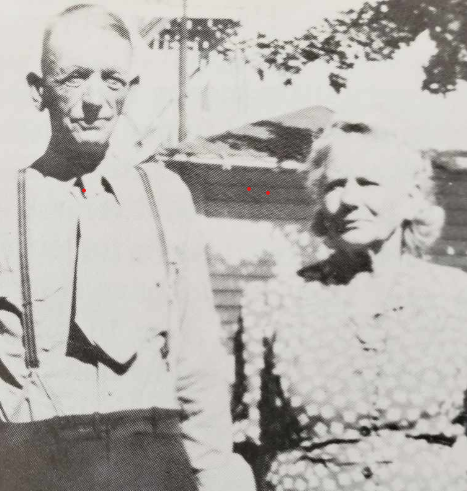 Edward and Esther Arbon DavisDate unknown
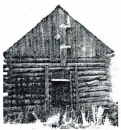 First home of George Arbon in Arbon Valley, 18951895
5 PHOTOGRAPHS · 1 LAND PATENT · 2 NEWSPAPER CLIPPINGS · 3 FAMILY TREESOpen the Arbon family album ↗
Sources and open questions
Everything above comes from the archive’s family histories and the public records the valley map checked them against. Where accounts disagree, the page says so rather than choosing silently.
Where the accounts differ
- Arrival year (1892–1895), first winter (1893–94, 1894–95 or 1895–96) and post-office year (1897 or 1898) vary between accounts; the federal records give 1898 for the post office.
- George’s birthplace (Graveley) and the day January 5, 1840, rest on family sources; no English register has been seen, and the year of his naturalization is unknown.
- That the 1915 patentee “Mary Ann Arbon” was George’s daughter Mayme rests on name, place and time (probable).
- Margaret’s given name (Ellen in the 1880 census, Helen in family records) and her birth year (1871 or 1870) conflict.
Sources 30
Show every source
- ArbonJacob Andersen · posted 2018
- George Dennis ArbonMelinda Campbell · posted 2019
- Joseph Nicholas ArbonMelinda Campbell · posted 2019
- Joseph George ArbonMelinda Campbell · posted 2019
- Arbon (area history)Melinda Campbell · posted 2019
- DavisJacob Andersen · posted 2018
- Andrew "Otto" AndersenJacob Andersen · posted 2018
- James R. BaileyMelinda Campbell · posted 2019
- The original homesteading families map (2019)
- Deseret Evening News, July 14, 1906, page 8: Andrew Jenson’s letter from ArbonUtah Digital Newspapers (University of Utah)
- American Falls Press, 1917-03-29, page 7 (Mrs. E. A. Logan, ‘Bannock Valley: A Historical and Industrial Review’ (ed. 2))American Falls Press
- Salt Lake Herald, November 27, 1898, page 3: marriage licences (Joseph Arbon and Elizabeth Davis, both of Samaria)Utah Digital Newspapers (University of Utah)
- NARA M1620 reel 4, Blackfoot land office register of homestead entries 1897-1908 and desert-land abstractNational Archives (RG 49, General Land Office)
- Saints by Sea: George Arbon, 22, labourer, John J. Boyd, Liverpool April 23 – New York June 1, 1862Saints by Sea (BYU)
- 1870 U.S. census, Malad City, Oneida County, Idaho Territory, page 37 (George Arbon household, dwelling 2)U.S. Census Office
- 1880 U.S. census, Curlew precinct, Box Elder County, Utah, ED 7 (George Arbon household, dwelling 27)U.S. Census Office
- American Falls Press, 1921-04-01, page 1 (obituary of George Arbon: death, survivors, burial plan, life story)American Falls Press
- Homestead patent to George Arbon, June 10, 1909 (BLM IDBL 0000617): SW¼SE¼ Sec. 14, N½NE¼ and NE¼NW¼ Sec. 23, T11S R33E; Blackfoot 0617U.S. General Land Office (BLM GLO records)
- Desert-land patent to Joseph Arbon, August 20, 1907 (BLM IDIDAA 005262): 320 acres in Secs. 13, 14 and 24, T11S R33EU.S. General Land Office (BLM GLO records)
- Stock-raising homestead patent to Joseph G. Arbon, June 10, 1940 (BLM IDBL 0045699): 640.86 acres, Sec. 31 and NW¼ Sec. 32, T11S R33EU.S. General Land Office (BLM GLO records)
- Andrew Jenson, Encyclopedic History of the Church of Jesus Christ of Latter-day Saints (1941): Arbon, Crystal, Curlew Stake, Meadow, Mount View, Samaria and Summit entriesAndrew Jenson
- Salt Lake Tribune, September 26, 1972, page 26: obituary of Joseph Nicholas ArbonUtah Digital Newspapers (University of Utah)
- NARA M1126, Post Office Department Reports of Site Locations, roll 132 (Idaho: Owyhee-Shoshone, incl. Power Co.): Arbon, Crystal, Pauline formsNational Archives (Post Office Department)
- NARA M841, Record of Appointment of Postmasters: Power County, Idaho (register pages 87-88 and cards)National Archives (Post Office Department)
- Idaho Republican (Blackfoot), 1913-09-26, page 3 (dry-farming congress delegates: Joseph Arbon; Farm Women’s congress: Mrs. Joseph Arbon)Idaho Republican
- American Falls Press, 1916-03-16, page 7 (Falls-Bannock Telephone Co. directors)American Falls Press
- American Falls Press, 1916-08-10, page 2 (Power County commissioners’ proceedings: Arbon election judges)American Falls Press
- NARA T857, Extension Service Annual Reports: Idaho, 1913-1944 (Power and Oneida county agents’ narratives)National Archives (RG 33, Extension Service)
- 1950 U.S. census, Power County, Idaho, ED 39-11 (Arbon election precinct; sheet not stated)U.S. Census Bureau
- History of George Dennis Arbon Family (FamilySearch document; from Bannock Valley, pages 93–94)Arvilla M. Arbon and Delta Arbon Harmon (about 1969–70)
Research notes
- George Arbon’s biography is the most detailed account and is followed for his arrival date.
- George Arbon’s land (T11S R33E): homestead SW¼SE¼ Sec. 14 and N½NE¼, NE¼NW¼ Sec. 23 (application 8087, May 27, 1901; patent June 10, 1909) and a cash forty, SW¼SW¼ Sec. 24 (1911). Joseph’s 320 acres were a desert-land entry (no. 3363, May 16, 1902; proof 1906; patent 1907), not a homestead as the original ArbonValley.com account says.
- The farmstead and the present meetinghouse probably stand on George’s NE¼NW¼ Sec. 23, north of Church Road (the forty’s south line); the 1928 church across the road probably stood on Esther Davis’s SE¼NW¼.
- Census anchors: Malad, August 1870 (George 29, Sarah 20, “Emma” 4, Nancy 1); Curlew precinct, Box Elder County, 1880, next door to George’s brother Charles; Joseph’s house in Malad, January 1920, with George aged 80.
- Joseph N. Arbon’s second term as bishop began in 1925 and ended between 1931 and mid-1940 (Willard Andersen was bishop by July 1940); Don Jensen as bishop about 1938 is only possible.
- No member of George’s brother Charles’s Snowville line is found in Bannock Valley. Ora Darling, named as Joseph N. Arbon’s “foster daughter” in 1972, is unidentified.