AVARBON VALLEYIDAHO · OUR SHARED HISTORY
FAMILY HISTORY · ARBON AREA

Davis

From Samaria, Oneida County, Idaho · earlier Wales (parents)

Two Welsh families from Samaria near Malad, not shown to be related. Samuel Deer Davis scouted Knox Canyon water with David Bowen in 1892; Edward Henry Davis and his wife Esther — George Arbon’s daughter — made their home in the valley from 1894. Ed Davis held irrigation shares, was bishop in 1914–16, and by about 1915 kept the valley’s best-stocked store, carrying neighbors on credit. Their descendants farmed at Arbon into the 2000s.

Arrived
June 1892 (Samuel D. Davis’s scouting trip); Ed and Esther Davis’s home from 1894, year-round by 1899 month known
Homesteads and land
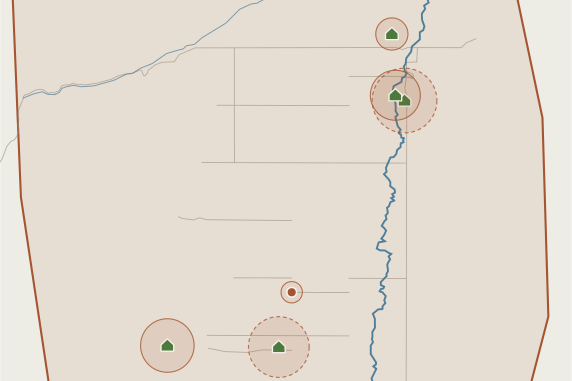
6 places on the map below ↓
People recorded
16 across 4 generations ↓
Named for them
Davis Lane
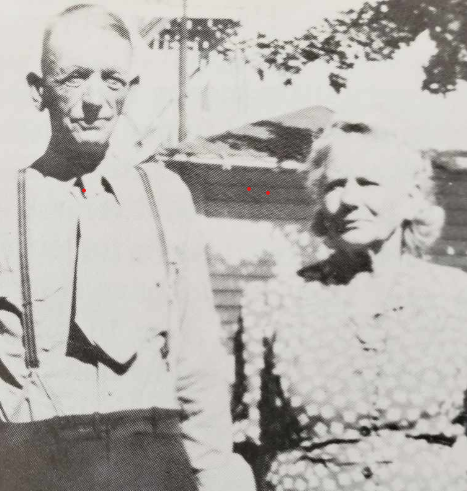
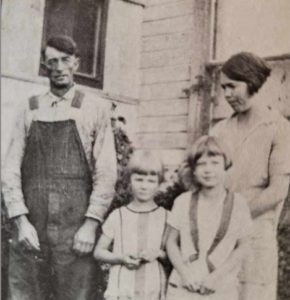
Edward and Esther Arbon Davis
Edward and Esther Arbon DavisDate unknown
FOREWORD · THE ORIGINAL ACCOUNT

From the family history

The account first written for this family on ArbonValley.com, kept in full. The chapters after it add what the records and the other family histories tell.

The first mention of the Davis family in Bannock Valley, Idaho (later to be called Arbon Valley) was in June of 1892 when David John Bowen and Samuel Deer Davis, from Samaria, Oneida, Idaho (near Malad) came over the mountain looking for land and water. According to Bannock Valley, they found a stream of water coming from Knox Canyon, but it disappeared before reaching the valley. “Yet they felt encouraged that water could be conveyed to the valley by digging ditches.” Who but our pioneer forebearers would ever even consider digging ditches through sod – for miles? The men “commenced work upon a ditch the same fall and others of the brethren came over from Samaria to assist in that work.” None of them spent that winter in the valley, but all returned to their homes and families in Samaria.

The following year (1893) they returned with more men.  “They made a ditch about one and a half miles long to get the water for irrigation purposes from the mouth of Knox Canyon to the land which they staked off and secured by squatters’ rights. They plowed considerable land that fall.” Ten acres were sowed with rye by another homesteader, George Arbon, to be cut the next year for hay. Most of the men lived in their wagon boxes that season, although David Bowen built a small one-room cabin. The year 1893 was the first winter someone (George Arbon) stayed through an Arbon winter, as even the native people did not stay in the valley through the winters.

Samuel Deer Davis applied for a water right on Crow Creek in 1892 as one of the earliest homesteaders.  After that he seemed to disappear from the history of Arbon Valley, but other Davises came into the valley and farmed for several generations.  One of these was Edward Henry Davis, who married Esther Rebecca Arbon, the daughter of George Arbon, the man whom the valley was named for. Their son, Edward Arbon Davis, was also a farmer in the valley. Davises farmed in the valley until the early 2000s.

Today there is a one-mile long road called Davis Lane, two miles south of the original Davis Ranch and store which is at the confluence of Church Road and Bailey Road.
THEIR STORY · FROM THE RECORDS

Their story

In June 1892 Samuel Deer Davis and David John Bowen crossed the mountain from Samaria, found Knox Canyon water sinking into the ground, and decided ditches could carry it; Samuel planted a trial patch of wheat. The family account says he filed a water right, but none has been found, and he did not settle in the valley. Samuel — the Samaria voter whose conviction under Idaho’s test oath became the Supreme Court case Davis v. Beason (1890) — later became a lawyer, Oneida County probate judge and Twin Falls city attorney.

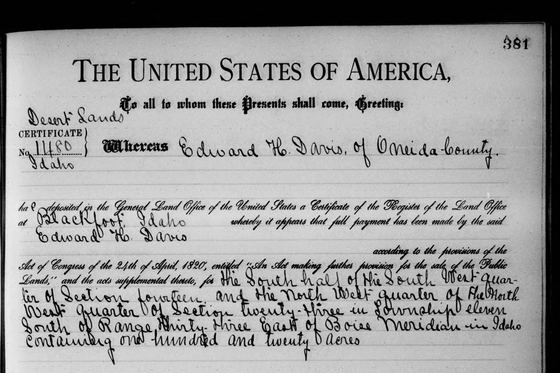
Ed Davis married Esther Arbon in 1892, and in 1894 they moved into a one-room, dirt-floored cabin just west of her father’s place; their first children were born at Pleasantview, and Ernest, born in June 1899, was the first known to be born at Arbon. Esther dipped water from the canal before the cattle reached it upstream. Ed held shares in the Bannock Valley Irrigation Company and is credited in the Davis account with discovering summer fallowing when an unplanted field outyielded the rest. In 1905 Ed entered a homestead and Esther desert land in her own name; with Ed’s desert land they patented 440 acres in Sections 14, 22 and 23, beside George Arbon and John Payne.

When the Arbon branch was organized in 1900 Ed was an assistant Sunday-school superintendent; he was ward clerk in 1913 and bishop of the Arbon Ward from 1914 to 1916, and later Valley View school clerk and Victory Loan chairman (1919). By the winter of 1912–13 he sold groceries and hay from his home, and about 1915 he opened a “fine general, up-to-date” store at Church and Bailey Roads (the family remembered 1910). It sold staples, gasoline and kerosene; a homesteader, probably Kate Lee, wrote that her family would have starved without his credit. The Davis account says that after Julian Maes murdered Esther Westcott and killed himself in January 1915 the bodies were brought to the store; the one contemporary report does not mention it.

Son Eddie married May Mathews in December 1917, proved up 320 acres in 1919, and moved their one-room house on logs to a better-watered farm on present Davis Lane, where they raised their grandson Craig Parkinson. May drove neighbors to Pocatello in emergencies. Ed’s youngest brother D. G. Davis farmed in partnership with Joe Arbon from about 1917 to 1930.

Ed and Esther spent the winter of 1923–24 in Pocatello, kept the store until about 1931, and by 1935 lived on their own farm at Tyhee, north of Pocatello. Their sons Ernest and Orval and son-in-law Lester Payne farmed at Arbon into the 1940s–60s, and Orval’s son Norman and his wife Shirley ran the family’s farm and ranch at Tyhee and Arbon into the 2000s.

Samuel’s eldest brother David Thomas Davis farmed wheat and carried the Arbon–Malad mail about 1898–1908 and probably made the 1901 homestead entry at the north end recorded for “David T. Davis”; his son Eynon homesteaded on the Pauline side from 1907 to 1921.

Sources: Davis · Edward Henry Davis & Esther Rebecca Arbon · Eddie Arbon Davis & Rosa May Mathews · Arbon (area history) · The original homesteading families map (2019) · American Falls Press, 1917-03-29, page 7 (Mrs. E. A. Logan, ‘Bannock Valley: A Historical and Industrial Review’ (ed. 2)) · WWII draft registration card (1942): Ernest Ray Davis, Arbon · 1880 U.S. census, Samaria, Oneida County, Idaho Territory, ED 26 (David P. Davis and Mary D. Price households)

Where they came from

IDAHOUTAHMaladSamariaSnowvilleLoganMendonWellsvilleBrigham CitySalt Lake CityPocatelloAmerican FallsAlmoArbon Valley
Earlier: Wales (David Price Davis emigrated 1855; Elizabeth Griffiths of Machynlleth). Route drawn only between places named in the family history; the lines are schematic, not trail routes.
  1. Wales (David Price Davis emigrated 1855; Elizabeth Griffiths of Machynlleth)
  2. Samaria and Pleasantview, near Malad1870s–1890s
  3. Bannock Valley1892–94

Sources: Edward Henry Davis & Esther Rebecca Arbon · 1880 U.S. census, Samaria, Oneida County, Idaho Territory, ED 26 (David P. Davis and Mary D. Price households) · Pocatello Tribune, 1945-06-29, page 5 (obituary of Edward Henry Davis)

THE PEOPLE

The people

16 people of the Davis family on the valley map, household by household, and 2 histories of their own in the archive. Names open their histories; portraits open in the family album.

The households 5

Each with the people who married in, and their children and grandchildren below, oldest first.

David Thomas Davis

1855–1920

Eldest brother of Samuel Deer Davis; father of Eynon L. Davis

More about David

By his daughter’s account he farmed wheat in Arbon Valley about 1900 and carried the mail from Arbon to Malad before moving to Carey in 1908. He was probably the “David T. Davis” of Arbon who entered a north-end homestead on May 27, 1901, the same day as George Arbon, and proved up in 1903 (patent 1904). He is one candidate for the “Tom Davis” mail carrier of the Otto Andersen blizzard story.

1 child

  1. Eynon Leon Davis 1886–1968

    Nephew of Samuel Deer Davis

    Married Rachel Jones Davis (1908)

Samuel Deer Davis

1859–1923

Explored Bannock Valley with D. J. Bowen in 1892; son of Mary Deer; not shown to be related to Ed Davis

More about Samuel

Scouted Knox Canyon water with David Bowen in June 1892 and planted a trial patch of wheat; the family account says he filed a water right (on “Crow Creek”), which has not been found. He was the Samaria voter convicted under Idaho’s test oath and the appellant in Davis v. Beason (1890), and later a lawyer, Oneida County probate judge and county attorney, and Twin Falls city attorney. His brother David Thomas Davis and nephew Eynon farmed at Arbon.

Read their history ↗
Edward and Esther Arbon Davis

Edward Henry Davis

1873–1945

Husband of Esther Arbon (married 1892); son-in-law of George Arbon; eldest son of David Price Davis and Elizabeth Griffiths of Samaria

More about Edward

Irrigation shareholder, storekeeper, ward clerk and bishop (1914–16); credited in his family’s account with discovering summer fallowing. He sold groceries from his home by about 1912–13 and kept the general store from about 1915 to about 1931; by 1935 he and Esther lived on their own farm at Tyhee, north of Pocatello.

Read their history ↗

Esther Rebecca Arbon Davis 1873–1954

Married 1892

Married 1892 · 5 children

  1. Edward “Eddie” Arbon Davis 1892–1969

    Married Rosa May Mathews Davis (1917)

    1. Lois Berdena Davis Bolingbroke 1918–1957

      Wife of John Henry Bolingbroke Jr. (married 1937)

  2. Ernest Ray Davis 1899–1978

    The first of their children known to be born at Arbon

  3. Orval Clarence Davis 1902–1971

    Husband of Delora Thomas (married 1930)

    1. Orval Norman “Norm” Davis 1930–2007

      Grandson of Ed and Esther Davis

  4. George Arbon Davis 1905–1982

  5. Elizabeth Pearl Davis Hopkins 1910–1994

    Wife of James Henry Hopkins (married 1928)

David Griffith “D. G.” Davis

1882–1969

Youngest brother of Ed Davis and Lizzie Arbon

More about D. G.

Farmed in partnership with his brother-in-law Joe Arbon from about 1917 to 1930 and lived next to the Arbons in 1930. He married Daisy Devlyn in 1924; the family lived at Arbon and Malad before moving to Ogden in 1942. He was not the 1901 north-end homesteader that the BLM index calls “David G. Davis”; the land-office register reads David T. Davis.

Edwin Craig Parkinson

1940–1986

Grandson of Eddie and May Davis (son of their daughter Ardella), raised by them

More about Edwin

Grew up in Eddie and May Davis’s home at Arbon, bought their farm in 1967 and built the brick house on Davis Lane beside the family’s enlarged one-room house.

Read their history ↗
THE LAND

Homesteads and land

6 places the Davis family took up or held, 1894–1919, placed from the land patents, the entry registers and the family accounts.

Map of the Davis family’s homesteads and land, numbered as in the list123456
Numbers match the list. A solid ring marks a place documented from the land records; a dashed one, an approximate place. See the Davis family on the valley map ↗
  1. Ed Davis ranch and store

    1894 · Edward Henry Davis, Esther Rebecca Arbon Davis Strongly documented

    At the meeting of Church Road and Bailey Road, one mile west of the highway; the Davis store (about 1912–15; the family remembered 1910) stood across the road to the west. Ed Davis built his first one-room cabin just west of his father-in-law George Arbon’s place. Ed and Esther’s 440 acres lay around this corner, in Sections 14, 22 and 23 (T11S R33E).

  2. Davis Lane (Eddie Arbon Davis)

    1919 · Edward “Eddie” Arbon Davis, Rosa May Mathews Davis Approximate location

    South of the original Davis ranch. Eddie and May Davis’s enlarged house still stands next to the brick home their grandson Edwin later built on Davis Lane. Both versions of the family map show a Davis circle here.

  3. Davis circle on the family map, north-central valley (perhaps the David T. Davis homestead of 1901–04, or Evans land)

    year not recorded Approximate location

    The 2019 family map shows a second Davis circle on Bannock Creek north of Bowen Lane. The text does not say which Davis household it represents, and the earlier map version labels the same spot “Evans.” About half a mile away lies the homestead entered in 1901 by “David T. Davis” of Arbon (probably Samuel Deer Davis’s brother David Thomas Davis; N½SE¼, SE¼SE¼ Sec. 36 T10S and Lot 1 Sec. 1 T11S R33E, patent 1904), and L. B. Evans’s 1902 desert land adjoins that homestead — so the circle may mark either family.

  4. Eynon Davis’s homestead (entry 1907)

    entry April 1907 · Eynon Leon Davis, Rachel Jones Davis Strongly documented

    Eynon L. Davis’s homestead, the SE¼ of Sec. 25, T10S R33E, on the Pauline side of the north end (entered April 1907; patented September 16, 1912). Eynon and Rachel Davis lived here from 1908 until they left for Jerome in March 1921; the Swims, Butlers and Kramers held the rest of the section.

  5. Eddie Davis’s homestead (about 1916; patent 1919)

    1916 · Edward “Eddie” Arbon Davis Strongly documented

    The 320.34-acre enlarged homestead patented on December 4, 1919, to “Edward Davis”, probably Eddie Arbon Davis (his father had used his homestead right): Lot 4 and the SW¼SE¼ of Sec. 20, the W½NW¼ of Sec. 28 and the NE¼ of Sec. 29, T11S R33E, on the south-west side of the Arbon floor, with the Iverson homesteads as neighbours. Eddie proved up in May 1919; the family later farmed on Davis Lane, to the east.

  6. David T. Davis’s homestead (entry 1901)

    entry on May 27, 1901 · David Thomas Davis Strongly documented

    The homestead entered on May 27, 1901, by “David T. Davis” of Arbon — probably David Thomas Davis, Samuel Deer Davis’s brother — the N½SE¼ and SE¼SE¼ of Sec. 36, T10S R33E, and Lot 1 of Sec. 1, T11S R33E, on Bannock Creek at the north end. Final certificate March 20, 1903 (the first homestead proved up in the valley) and patent June 2, 1904. He moved to Carey in 1908. About half a mile from the northern Davis circle on the family map.

The land patents

The federal patents that made the homesteads theirs, from the General Land Office records.

THROUGH THE YEARS

82 dates in the family’s history

Every date the valley map shows when you follow the Davis family, era by era: the most telling of each era first, the rest a click away. Dates keep the sources’ own wording.

BEFORE 1884 · 1 DATE

Before Homesteading

A Shoshone and Bannock homeland; trails, travelers and cattle range.

  1. June 1880Family history

    Two Davis households at Samaria

    The 1880 census of Samaria lists David P. Davis’s family, with seven-year-old Edward, and in a separate household Mary D. Price with her son Samuel, 20. The two Davis families were not related on present evidence.

    Edward Henry Davis, Samuel Deer Davis

1884–1892 · 6 DATES

Early Claims

Possessory claims and water rights before the valley opened.

  1. 1885–1894 by different accounts; earliest record 1892Valley first

    The first settlers

    Who settled the valley first is one of the oldest questions in its history, and the records settle only part of it.

    Samuel Deer Davis

  2. November 1888 – February 1890Family history

    Samuel D. Davis and the test oath

    Samuel D. Davis of Samaria voted in November 1888 in defiance of Idaho’s test oath, was the only one of 56 men indicted to be convicted, and lost his appeal in Davis v. Beason (1890). The sheriff sold his horse and business interest toward the fine.

    Samuel Deer Davis

  3. 1892–1896Valley first

    The first crops

    Farming in the valley began with small trial plantings in 1892–93, a first real grain harvest in 1894 and the first irrigated alfalfa in 1896.

    Samuel Deer Davis

  4. priority April 1, 1892 (decreed April 9, 1907)Valley first

    The oldest settler water rights

    The oldest dated records of settlers in the valley are three Rattlesnake Creek water rights with a priority of April 1, 1892.

    Samuel Deer Davis

  5. June 1892Event

    Bowen and Davis look for land and water

    David John Bowen and Samuel Deer Davis came over the mountain from Samaria, near Malad, in June 1892. They found water coming out of Knox Canyon that sank underground before reaching the valley floor and decided ditches could carry it to fields. Work on a ditch began that fall with help from Samaria; everyone went home for the winter. The Bailey family history and the 1917 valley history add J. R. Bailey and Ed Davis to the party; the Bailey history dates it June 21, 1892.

    Samuel Deer Davis, Edward Henry Davis

  6. 1892Event

    Samuel Davis files a water right

    By the Davis family’s account Samuel Deer Davis applied for a water right “on Crow Creek” in 1892; he also planted a trial patch of wheat that year. He did not settle in the valley, and later became a lawyer and probate judge. Other Davis men from Samaria farmed the valley for generations.

    Samuel Deer Davis

1893–1899 · 12 DATES

1890s Settlement

Homesteads, the first ditch, and the first winters.

  1. August 1893Event

    Irrigation company organized in Samaria

    The earliest meeting of what became the Bannock Valley Irrigation Company took place in Samaria. Its purpose was to own and control the water of Knox Creek through dams, ditches, pipes, flumes and reservoirs. Members pooled money, labor, equipment and horse teams, and kept detailed minutes — down to the pay for each man’s work and team.

    Edward Henry Davis

  2. 1893–1895 (accounts differ); decreed priority July 24, 1897Event

    A mile-and-a-half ditch from Knox Canyon

    Working together, the settlers dug a ditch about one and a half miles long from the mouth of Knox Canyon to land they held by squatter’s rights. The Davis account dates it to 1893, the Arbon area history to 1894, and the George Arbon biography to 1895. In later years it grew to several miles — about seven by 1906, when Andrew Jenson described it — and its Knox Canyon Creek water right carries a decreed priority of July 24, 1897.

  3. 1894Event

    Families come for the summer

    Spring 1894 brought back the Samaria homesteaders and others from Cache Valley, including the Andersen brothers on the east side of the Arbon area. Ed and Esther Arbon Davis came with their baby, and George Arbon brought his motherless children. Families shared what they had: wire to fence small fields, D. J. Bowen’s Osborne dropper to cut grain, and a thresher brought from Samaria through Mine Canyon.

    Edward Henry Davis, Esther Rebecca Arbon Davis

  4. March 18, 1895Event

    Bannock Valley Irrigation Company filed

    The company was formally filed in Samaria. Edward Davis held 4⅗ shares and Lorenzo Evans four; George Arbon was a charter member. Within a few years the canal from Knox Canyon reached the Bowen place on present Bowen Lane.

    Edward Henry Davis

  5. 1895Event

    Stockmen settle the north end (later Pauline)

    Latter-day Saint stockmen, among them the Daniels brothers, located at the north end of Bannock Valley “in 1895 and following years” (Jenson); the original ArbonValley.com account’s 1895 list also names Bolingbroke, Davis, Evans and Lusk families. Federal homestead entries at the future crossroads began in March 1901 (Thomas D. Daniels), and Pauline grew into a named crossroads with a store, post office and ward from 1911, on the roads to American Falls and Pocatello. The original ArbonValley.com account’s wider, undated list of “prominent first residents” adds the Nobles and Kowallises, who came in 1905 and 1909.

  6. by 1898Event

    The ditch reaches the Ward fields

    By 1898 the ditch out of Knox Canyon was several miles long, reaching Jesse N. Ward’s upper fields. Long-time residents later said neither Knox nor Buck Wright Canyon proved a very reliable source of water.

Show 6 more from these years
  1. 1893Family history

    Ed Davis stakes a claim

    The 1917 county history names Ed Davis, with J. N. Arbon, D. J. Bowen and an “H. Davis”, among those who staked land under squatter’s rights in 1893, before the township was surveyed.

    Edward Henry Davis

  2. 1894Homestead or land

    Ed Davis ranch and store

    Edward Henry Davis, Esther Rebecca Arbon Davis

  3. 1896Event

    One header for the whole valley

    After poor first crops, 1896 brought a good harvest. Ed Davis, D. J. Bowen, James Bailey, Lorenzo Evans and Joseph Arbon pooled $263 for a ten-foot Hodges header, which cut all the grain in the valley that year.

    Edward Henry Davis

  4. January 26, 1898 (one account: 1897)Valley first

    The first child born to the settlers

    May Flint, daughter of an Ogden couple then living in the valley, is the first child known to have been born to the settler families.

    Ernest Ray Davis

  5. about 1897–1900Valley first

    The first mail carriers

    At first the settlers took turns carrying the mail from Malad over Rocky Ridge, and two families each remember their own man as the first regular carrier.

    David Thomas Davis

  6. 1898 or 1910 (accounts differ); an incorporated company by 1917Event

    Arbon Irrigation Company

    The Arbon area history dates the Arbon (Valley) Irrigation Company to 1898 — essentially the same organization as the Bannock Valley company, it says, run by the same early homesteaders and later joined by others, including Davis, Bailey, Hawkins, Williams, Ward, Arbon, Bowen, Roderick and Evans. The Edward Davis biography says it was formed in 1910, with Davis a charter member holding fifteen shares. Records show it was an incorporated company by October 1917, when it was on the state’s list of corporations behind in their licence tax, and a 1923 court notice lists three shares of its stock. The two company names have separate federal canal files, so it may have been a successor or a second company.

    Edward Henry Davis

1900–1912 · 22 DATES

Early 1900s Growth

Schools, churches, stores and post offices in every area.

  1. August 19, 1900Event

    Arbon LDS Branch organized

    On August 19, 1900, about ten families and a few single men were organized as the Arbon Branch of the Samaria Ward, Malad Stake, with D. J. Bowen as presiding elder — by the original ArbonValley.com and family accounts, in Bowen’s home. J. R. Bailey was the first Sunday School superintendent, with Ed Davis and Joe Arbon as assistants. It was a branch, not yet a ward: Arbon became a ward in 1908. Meetings moved among private homes, and for decades church was held only in the summer months, when families were in the valley.

    Edward Henry Davis

  2. March–September 1901Event

    The first homestead entries

    Once the townships were surveyed, the settlers who had squatted on the valley floor since the 1890s filed at the Blackfoot land office. The register dates the first entries: Jennett Daniels Price and Henry Daniels on March 12, 1901, at West Fork, then Donum and Thomas D. Daniels later that month; Charles A. Bailey on March 28, the first on the Arbon floor; D. B. Evans and Julius Abter in April; John Payne’s and Jane Dalton’s desert-land claims in May; Thomas Gibbons, the Bailey brothers, George Arbon, David T. Davis and Jesse Ward’s desert land in late May; D. J. Bowen and J. A. R. Gibbons on June 6 and William Arnn on June 8; the first Summit entries — Joseph T. Wood, Peter Larsen of Mendon and Frederick J. Manning — on July 2; and John C. and Otto Andersen on September 6. Most gave their residence as “Arbon, Oneida.”

    David Thomas Davis

  3. 1901–1902 (accounts differ)Event

    A log building for school, church and dances

    The community hauled logs from the canyons and built a 20×36-foot building “by everyone, regardless of church affiliation.” The original ArbonValley.com accounts put it beside the George Arbon homestead on Church Road, where the present meetinghouse stands, on land they say Lorenzo and Chloa Bailey gave; the Power County history puts the 1902 log school in Section 12 instead. It served as Valley View School, meetinghouse, dance hall and public meeting place, and was Oneida County School District 46 by 1907; around 1904 the logs were covered with lumber.

  4. 1902 (1917 history)Valley first

    The first store

    The earliest store on record in the valley is the small one Tom and Susannah Evans opened in 1902.

    Edward Henry Davis

  5. about December 31, 1910 (earliest on record); valley owners from 1915Valley first

    The first automobiles

    The earliest automobile on record in the valley carried an American Falls party to the Arbon schoolhouse at the end of 1910, to argue for joining the new Power County.

    Edward Henry Davis

  6. about 1912–1915 (family account: 1910)Event

    Ed Davis opens a general store

    Ed Davis sold groceries and hay from his home by the winter of 1912–13, and about 1915 opened a “fine general, up-to-date” store near it — false-fronted, the best in the valley to that time, well stocked with staples and selling gasoline and kerosene. Many homesteaders went eleven months a year without cash; one wrote that her family would have starved without his credit. The store traded until about 1931.

    Edward Henry Davis

Show 16 more from these years
  1. September 1900Family history

    Samuel D. Davis, lawyer and judge

    Samuel D. Davis was the Republican nominee for Oneida County probate judge in 1900; he later served as probate judge and as county attorney.

    Samuel Deer Davis

  2. 1901–1913 (entries 1901–1905; patents 1907–1913)Event

    The Arbon kin take up Section 23

    On May 3, 1901, John Payne, George Arbon’s son-in-law, made a desert-land entry on the SE¼ and S½NE¼ of Section 23 (T11S R33E), giving Arbon as his residence; on May 27 George Arbon entered his homestead on the NE¼NW¼ and N½NE¼ of the section, with a forty in Section 14. Joseph N. Arbon’s 320-acre desert-land entry beside his father followed in May 1902, Ed Davis’s homestead in September 1905 and Esther Davis’s own desert-land entry in December 1905. When the patents were issued, from 1907 to 1913, every forty in Section 23 belonged to George Arbon, his daughter Esther and her husband Ed Davis, or his son-in-law John Payne.

    Edward Henry Davis, Esther Rebecca Arbon Davis

  3. entry on May 27, 1901Homestead or land

    David T. Davis’s homestead (entry 1901)

    David Thomas Davis

  4. final certificate March 20, 1903; patent June 2, 1904Valley first

    The first homestead proved up

    David T. Davis of Samaria was the first in the valley to prove up a homestead, two years after the first entries.

    David Thomas Davis

  5. undated; probably between about 1900 and 1908Tragedy

    Otto Andersen finds the mail carrier half frozen

    Caught by a three-day west blizzard on the mail trail to Malad, the carrier Tom Davis was found nearly frozen by the Andersens’ granary.

  6. entry April 1907Homestead or land

    Eynon Davis’s homestead (entry 1907)

    Eynon Leon Davis, Rachel Jones Davis

  7. April 1907Family history

    Eynon Davis enters a homestead

    Eynon L. Davis, then 20, entered a homestead on the SE¼ of Section 25, T10S R33E, at the north end of the valley toward Pauline.

    Eynon Leon Davis

  8. about 1907 (family memory); documented 1909–1914Event

    Aunt Emmy’s country store

    Five-year-old Delta Arbon and her cousin Orval Davis walked “down to our Aunt Emmy’s store,” a country store where the candy was kept in open buckets. Aunt Emmy was very probably Emily Annette Arbon Payne, aunt to them both. John Payne hauled supplies “for his store” from Pocatello in 1909 and 1911, travellers stayed at “the Payne hotel,” and Polk’s 1914 gazetteer lists Mrs. E. A. Payne’s general store at Arbon.

  9. 1908Family history

    David T. Davis moves to Carey

    David Thomas Davis, who had farmed wheat at Arbon and carried the Arbon–Malad mail, moved his family to Carey in 1908.

    David Thomas Davis

  10. November 1908Family history

    Ed and Eynon in the wheat caravan

    Ed Davis and Eynon Davis drove two of the sixteen wagons that hauled Arbon wheat to the railroad at Michaud.

    Edward Henry Davis, Eynon Leon Davis

  11. Winter of 1909–10 (the original ArbonValley.com: 1909)Event

    Neighbors rescue a Kentucky family

    The Nunnelleys, newly arrived from Kentucky, ran out of feed in a severe winter; their horses would only lie down in the deep snow. Joe Arbon came with a load of hay and Ed Davis with groceries. “They stayed all night and we danced and sang.”

    Edward Henry Davis

  12. April 1910Family history

    The 1910 census at Arbon

    Ed and Esther Davis and their children were counted at Arbon in April 1910, next door to Daniel V. Roberts; Eynon and Rachel Davis’s household was also counted in Arbon precinct.

    Edward Henry Davis, Esther Rebecca Arbon Davis, Eynon Leon Davis, Rachel Jones Davis

  13. March 1911Family history

    At the Welsh “doings” in Malad

    Ed and Esther Davis went to Malad for the Welsh “doings”, the eisteddfod of the Malad Valley’s Welsh settlers.

    Edward Henry Davis, Esther Rebecca Arbon Davis

  14. May–June 1911Family history

    Witness for a neighbour

    Ed Davis was one of four Arbon witnesses named in Dell C. Dalton’s final-proof notice.

    Edward Henry Davis

  15. September 1911Family history

    Ed Davis’s 1911 crop

    Ed Davis harvested 3,076 bushels from his dry farm in 1911.

    Edward Henry Davis

  16. September 16, 1912Family history

    Eynon Davis proves up

    Eynon received the patent for his north-end homestead. That year he was also a witness for his neighbour Frank W. Swim’s proof.

    Eynon Leon Davis

1913–1929 · 31 DATES

Community Development

A new county, roads and phones — and the first departures.

  1. not dated; practised by 1916Valley first

    Summer fallowing comes to the valley

    Two families each credit their own pioneer with introducing summer fallowing, resting a field for a year to store moisture, the practice that made dry farming pay.

    Edward Henry Davis

  2. 1916Homestead or land

    Eddie Davis’s homestead (about 1916; patent 1919)

    The 320.34-acre enlarged homestead patented on December 4, 1919, to “Edward Davis”, probably Eddie Arbon Davis (his father had used his homestead right): Lot 4 and the SW¼SE¼ of Sec. 20, the W½NW¼ of Sec. 28 and the NE¼ of Sec. 29, T11S R33E, on the south-west side of the Arbon floor, with the Iverson homesteads as neighbours. Eddie proved up in May 1919; the family later farmed on Davis Lane, to the east.

    Edward “Eddie” Arbon Davis

  3. about 1918 (water wheel); home plants to the 1940sValley first

    The first electric lights

    Long before power lines reached the valley, George Bradley ran Rattlesnake Creek over a water wheel to make electric light for his ranch house.

    Edward “Eddie” Arbon Davis

  4. July 28, 1918Tragedy

    Corporal David Davis killed in France

    David T. Davis Jr., who had farmed with his brother at the north end of the valley, was killed instantly in action in France.

    Eynon Leon Davis

  5. 1919Homestead or land

    Davis Lane (Eddie Arbon Davis)

    South of the original Davis ranch. Eddie and May Davis’s enlarged house still stands next to the brick home their grandson Edwin later built on Davis Lane. Both versions of the family map show a Davis circle here.

    Edward “Eddie” Arbon Davis, Rosa May Mathews Davis

  6. December 1923 (earliest on record)Valley first

    The first radio

    The earliest radio found in the valley's records is the Allards': in December 1923 the Pauline teacher, Chester Smith, took his pupils to their home to hear it.

    Edward “Eddie” Arbon Davis

Show 25 more from these years
  1. 1913–1935Event

    Homesteaders in public office

    The valley’s settlers soon held county and state offices. William Allard sat in the Idaho House in 1915 and again in 1919–20. Power County’s third-district commissioner was a valley man from January 1917 to about 1935: G. A. Brahmstadt (1917–19), E. C. England of Pauline (1919–23), Perry Lusk (1923–25), who rode about forty miles to American Falls each month for $25, T. B. Evans (from 1925, probably to 1929) and Roy D. Lindley (probably 1929–35). John Payne was Arbon’s justice of the peace in 1915–19. Lorenzo Evans, elected Oneida probate judge in 1912, was named Power County’s first probate judge but never sat; Ed Davis’s 1914–16 office was the Arbon bishopric, not a county post.

    Edward Henry Davis

  2. 1913Family history

    Ward clerk

    Ed Davis served as clerk of the Arbon Ward in 1913.

    Edward Henry Davis

  3. March 1914Family history

    A Davis as constable

    “E. L. Davis”, probably Eynon, was constable of Arbon precinct in 1914.

    Eynon Leon Davis

  4. 1914 – late 1916Family history

    Ed Davis, bishop

    Ed Davis followed his brother-in-law Joe Arbon as bishop of the Arbon Ward in 1914 and served until late 1916, when D. J. Bowen succeeded him.

    Edward Henry Davis

  5. January 24, 1915Event

    Murder of Esther Westcott and suicide of Julian Maes

    On Sunday January 24, 1915, after a quarrel, Julian Maes, a homesteader at the north end of Summit, shot and killed his neighbour Esther Westcott, who held a homestead nearby, and then shot himself; he died about an hour later. She left two young children. The archive adds that he shot her as she ran across a field, that her children ran to neighbors for help and that both bodies were taken to the Davis store, and it says Maes left a note naming Jesse Ward administrator and leaving his land to her children, who were sent to their father in Nebraska; those details are not in the one contemporary report.

  6. winter 1916–17Event

    Stock starve in the winter of 1916–17

    Hay ran short and heavy snow killed stock in the Rockland and Arbon valleys in the winter of 1916–17, the county agent reported in March 1917. Arbon men said no more than twenty horses were lost there, with heavier losses on the reservation; one Davis wintered his horses high on Bowen’s peak. It is the only stock-killing winter of the decade found in the newspapers, and the Andersen family’s remembered “winter of 1919,” when horses were driven into the mountains, may be the same one.

  7. January 1918Family history

    D. G. Davis farms with Joe Arbon

    Ed’s youngest brother, David G. (“D. G.”) Davis, was farming at Arbon as the partner of his brother-in-law J. N. Arbon; he stayed in the valley until about 1930.

    David Griffith “D. G.” Davis

  8. April 1919Family history

    D. G. Davis buys the Roberts farm

    The Arbon column reported that Mr. Roberts had sold his farm to Dave G. Davis — probably Daniel V. Roberts’s homestead in Section 22, next to Ed’s land. What D. G. did with it is not known.

    David Griffith “D. G.” Davis

  9. April 1919Family history

    Victory Loan chairman

    Ed Davis was chairman for District 11 (Arbon), with Mrs. D. J. Bowen, in the Victory Liberty Loan drive.

    Edward Henry Davis

  10. about 1919Family history

    Samuel D. Davis moves to Twin Falls

    Samuel D. Davis moved to Twin Falls about 1919, where he became city attorney and then police magistrate.

    Samuel Deer Davis

  11. about 1919–20Family history

    A better-watered farm

    Eddie and May Davis moved their one-room house on logs to a better-watered farm south of the old Davis ranch, on what is now Davis Lane. Their enlarged house still stands there.

    Edward “Eddie” Arbon Davis, Rosa May Mathews Davis

  12. December 4, 1919Family history

    Eddie Davis’s 320-acre homestead

    A patent for a 320-acre homestead in Sections 20, 28 and 29, on the south-west side of the Arbon floor, was issued to “Edward Davis”, probably Eddie, who had proved up that May.

    Edward “Eddie” Arbon Davis

  13. June 1920Tragedy

    Four horses poisoned by squirrel bait

    A Davis of Arbon lost four of his best horses to poisoned oats left in an open sack in his field.

  14. January 1920Family history

    The Davises in the 1920 census

    The January 1920 census found Ed and Esther at Arbon with their younger children, Eddie and May on a farm they owned outright, D. G. renting a place at the north end, and Eynon and Rachel on their homestead.

    Edward Henry Davis, Esther Rebecca Arbon Davis, Edward “Eddie” Arbon Davis, Rosa May Mathews Davis and 3 more

  15. February 1920Family history

    Trapping coyotes

    Ed Davis and Joe Arbon were trapping coyotes together that winter.

    Edward Henry Davis

  16. 1920–21Family history

    Clerk of the Valley View district

    Ed Davis was clerk of School District 11 (Valley View) in 1920 and was re-elected in April 1921, serving with Otto Andersen and Chauncey Payne.

    Edward Henry Davis

  17. June 1920Family history

    George Davis finishes eighth grade

    George Arbon Davis was among the Arbon rural eighth-grade graduates of 1920; by 1923 he was at high school in Pocatello.

    George Arbon Davis

  18. Christmas Eve 1920 (as remembered; possibly another year)Event

    Santa in a blizzard

    The Joe Arbon family invited neighbors for Christmas Eve. A blizzard blew in, and “Santa (Ezra Andersen) had a hard time getting there with the children’s toys.” The guests stayed the night and dug themselves out at daylight.

  19. March 1921Family history

    Eynon’s family leaves for Jerome

    Eynon and Rachel Davis left the valley with their family for Jerome, Idaho, after some fourteen years at the north end.

    Eynon Leon Davis, Rachel Jones Davis

  20. March 1921Family history

    Seed-loan committee

    “Ed. Davis”, probably Ed, served with T. B. Evans on Arbon’s seed-loan committee.

    Edward Henry Davis

  21. June 1921 – 1925Event

    The Arbon oil tests

    In June 1921 the first oil test was drilled on Thomas S. Toyn’s ranch — probably the former Ripley ranch — and a two-day celebration on 25–June 26 drew 800 to 1,200 people; L. B. Evans promoted the Arbon Oil Co. and reported a showing of oil in January 1922. A second venture, the Gem State Petroleum Co., whose members included E. C. England, G. A. Brahmstadt, T. H. Hill, E. H. Davis and William Allard, brought a deep-drilling rig in December 1923; its well in Section 2 near the Central school was 950 feet deep by June 1924, and in 1925 the District 12 school stood “next door to the Arbon oil well.” No strike was reported.

    Edward Henry Davis

  22. 1920s–1940s (undated memories)Tragedy

    May Davis’s close calls

    Runaway horses over the car, a baby under a wagon wheel, a neighbour bleeding from a broken jug and her own daughter under a buggy wheel: May Davis remembered them all.

    Rosa May Mathews Davis, Edward “Eddie” Arbon Davis

  23. November 1923Family history

    Cattle to Tyhee

    The Davis cattle were driven out of the valley to winter at Tyhee, north of Pocatello.

    Edward Henry Davis, Edward “Eddie” Arbon Davis

  24. December 1923Family history

    Wintering in Pocatello

    Ed and Esther went to Pocatello for the winter, meaning to come back the next summer. Their youngest children, Lizzie and George, were already at high school there.

    Edward Henry Davis, Esther Rebecca Arbon Davis, Elizabeth Pearl Davis Hopkins, George Arbon Davis

  25. October 1925Family history

    Eddie Davis, school clerk

    Eddie Davis was clerk of the Valley View district, with Chauncey Payne as chairman and Bruce Pett.

    Edward “Eddie” Arbon Davis

1930–1949 · 7 DATES

Depression & Change

Drought, closures, tractors, electricity, the reservation boundary.

  1. April 1930Family history

    Four Davis households at Arbon

    The 1930 census found Ed and Esther at Arbon with Orval, his wife Delora and George, and the households of Eddie, Ernest and D. G. Davis also at Arbon.

    Edward Henry Davis, Esther Rebecca Arbon Davis, Orval Clarence Davis, George Arbon Davis and 3 more

  2. 1930–32Family history

    The store as bait outlet

    The county agent named Ed Davis, and then “the Davis Store”, as Arbon’s outlet for poisoned grain against ground squirrels in 1930–32. Esther’s family later dated the store’s closing to 1931.

    Edward Henry Davis, Esther Rebecca Arbon Davis

  3. 1933–1943Event

    New Deal farm committees and the grange

    From 1933 the county agent’s wheat-allotment committees of the Agricultural Adjustment program were the valley’s main civic bodies: for Arbon (Roy Lindley, J. N. Arbon, John Anderson and Ed Davis; in 1934 J. N. Arbon, J. L. Payne and Frank Phelps), for Pauline (E. C. England, William Allard and M. V. Tallon), for the reservation side (Perry Lusk), for Crystal (Norman Hayden, Chester Smith and Elva Thacker) and, on the Oneida side, for Summit (J. P. Sorensen, J. I. Nunnelley and I. Y. Rush) and Buist (H. S. Bird), with R. H. Willie also serving. The Arbon Valley Grange No. 349 kept records from 1934 to 1939. Chauncey C. Payne became county AAA chairman in 1941 and War Board chairman in 1942; Norman Hayden chaired the Arbon–Crystal planning committee in 1941–42, with Allard as secretary and Waldo Evans among its members.

    Edward Henry Davis

  4. January 1, 1935Tragedy

    A car full of Arbon youngsters goes into the Portneuf

    On New Year’s Day a car carrying Arbon young people skidded through a guard rail into the Portneuf River; the driver held two Davis girls above the water until help came.

    Rosa May Mathews Davis, Edward “Eddie” Arbon Davis

  5. by April 1935 (accounts give 1925 to 1938)Family history

    Ed and Esther move to Tyhee

    By April 1935 Ed and Esther were living on their own farm in Tyhee precinct, Bannock County, and they were still farming there in 1940. By the family’s account their son Orval farmed the Arbon land.

    Edward Henry Davis, Esther Rebecca Arbon Davis, Orval Clarence Davis

  6. April 1940Family history

    The next generation at Arbon

    In 1940 Eddie and May, Orval and Delora, and Ernest and Eileen Davis were all farming at Arbon, while the county agent still met at “Upper Arbon – Ed Davis’s Store”.

    Edward “Eddie” Arbon Davis, Rosa May Mathews Davis, Orval Clarence Davis, Ernest Ray Davis

  7. 1945 or 1947 (accounts differ; Buist about 1947)Event

    Electric power arrives

    Through the Rural Electrification program, power reached Arbon Valley in 1945 (the Eph Bolingbroke page) or 1947 (Zella Bolingbroke’s original text in Bannock Valley), and the Buist area about 1947. Families who had relied on coal-oil lamps, a Delco plant, wind chargers — or, at the Bradley ranch, a water wheel on Rattlesnake Creek — now bought electric stoves and refrigerators.

1950 ONWARD · 3 DATES

Generations

Fewer, larger farms; descendants on the old homesteads.

  1. April 1950Family history

    Eddie and May with grandson Craig

    The 1950 census found Eddie and May at Arbon with their daughter Sheri and their grandson Craig Parkinson, whom they raised. Ernest was also at Arbon, and Orval kept a house at Arbon while farming in Bannock County.

    Edward “Eddie” Arbon Davis, Rosa May Mathews Davis, Edwin Craig Parkinson, Ernest Ray Davis and 1 more

  2. after the Korean War (1950s)Family history

    Norman and Shirley take over

    After Korean War service, Orval’s son Norman and his wife Shirley returned to run the family farm and ranch in Tyhee and Arbon, which they kept into the 2000s.

    Orval Norman “Norm” Davis

  3. 1967Family history

    Craig Parkinson buys the Davis Lane farm

    Eddie’s grandson Craig Parkinson bought Eddie and May’s farm in 1967 and later built a brick house beside the old Davis home on Davis Lane.

    Edwin Craig Parkinson, Edward “Eddie” Arbon Davis, Rosa May Mathews Davis

Follow the Davis family on the timeline: all 82 dates ↗

STORIES OF THE VALLEY

Firsts and tragedies

The valley firsts the Davis family had a hand in, and the hard times it lived through, most remembered first.

Firsts 16

  1. 1885–1894 by different accounts; earliest record 1892

    The first settlers

    Who settled the valley first is one of the oldest questions in its history, and the records settle only part of it.

  2. January 26, 1898 (one account: 1897)

    The first child born to the settlers

    May Flint, daughter of an Ogden couple then living in the valley, is the first child known to have been born to the settler families.

  3. about December 31, 1910 (earliest on record); valley owners from 1915

    The first automobiles

    The earliest automobile on record in the valley carried an American Falls party to the Arbon schoolhouse at the end of 1910, to argue for joining the new Power County.

  4. 1945 or 1947 (accounts differ); Buist about 1947

    Electric power reaches the valley

    Electric service from the Rural Electrification program reached the valley in 1945 or 1947, depending on the account.

All 16 firsts with the Davis family ↗

Tragedies 9

  1. January 24, 1915

    The murder of Esther Westcott and the suicide of Julian Maes

    Julian Maes shot his neighbour Esther Westcott as she ran from him across a field, then turned the gun on himself.

  2. undated; probably between about 1900 and 1908

    Otto Andersen finds the mail carrier half frozen

    Caught by a three-day west blizzard on the mail trail to Malad, the carrier Tom Davis was found nearly frozen by the Andersens’ granary.

  3. July 28, 1918

    Corporal David Davis killed in France

    David T. Davis Jr., who had farmed with his brother at the north end of the valley, was killed instantly in action in France.

  4. 1920s–1940s (undated memories)

    May Davis’s close calls

    Runaway horses over the car, a baby under a wagon wheel, a neighbour bleeding from a broken jug and her own daughter under a buggy wheel: May Davis remembered them all.

All 9 tragedies with the Davis family ↗
THEIR PART IN THE VALLEY

What they built

IRRIGATION

Knox Canyon water

Samuel Davis and David Bowen began the first ditch in 1892; Ed Davis held 4⅗ shares in the Bannock Valley Irrigation Company and was a charter member of the later Arbon Irrigation Company.

STORES

The Davis store and its credit

Groceries and hay from Ed’s home by about 1912–13 and a general store from about 1915 (the family remembered 1910) to about 1931; credit from Ed Davis carried cash-poor homesteaders through the year.

INNOVATION

Summer fallowing

The Davis account credits Ed with discovering the benefit of summer fallowing (the Arbon account credits Joe and George Arbon).

CHURCHES

Bishop of the Arbon Ward

Assistant Sunday-school superintendent when the Arbon branch was organized in 1900; ward clerk in 1913; bishop of the Arbon Ward 1914–16.

SETTLEMENT

Land in Esther’s own name

Esther Davis entered 160 acres of desert land in Section 23 in December 1905 and received the patent in her own name in 1911 — one of the valley’s women landholders.

PUBLIC SERVICE

School and war-loan work

Ed Davis was clerk of the Valley View school district (1920–21) and Victory Loan chairman for District 11 (1919); Eddie was the district’s clerk in 1925.

THE FAMILY ALBUM

Photographs

Portraits and family groups first. Each opens with its caption, date and where it came from.

HOW WE KNOW

Sources and open questions

Everything above comes from the archive’s family histories and the public records the valley map checked them against. Where accounts disagree, the page says so rather than choosing silently.

Where the accounts differ

  • Samuel and Edward Davis had different parents; no kinship between the two Davis families is shown.
  • Samuel Davis’s 1892 water right (“on Crow Creek” in the family account) has not been found; there is no Crow Creek in the Bannock drainage.
  • When Ed and Esther settled at Tyhee is uncertain: about 1925 (Ed’s obituary), by April 1935 (1940 census) or 1936 (Esther’s obituary).
  • Whether Ed Davis took over the neighbouring Payne store’s trade about 1915 is not known.
  • That the 1901 “David T. Davis” was Samuel’s brother David Thomas Davis is probable, not proved.

Sources 27

Show every source
Research notes
  • The 2019 family map shows two Davis circles: one on Davis Lane and one on Bannock Creek north of Bowen Lane; the latter is not explained in the text (the 2018 map labels that spot Evans). The homestead entered in 1901 by “David T. Davis” (N½SE¼, SE¼SE¼ Sec. 36 T10S and Lot 1 Sec. 1 T11S R33E) lies about half a mile from it, and L. B. Evans’s 1902 desert land adjoins that homestead, so the circle may mark either family.
  • Ed and Esther’s land (T11S R33E): Ed’s desert land S½SW¼ Sec. 14 and NW¼NW¼ Sec. 23 (patent 1907); his homestead SW¼NW¼ and NW¼SW¼ Sec. 23 and N½SE¼ Sec. 22 (entry September 1905, patent 1913); Esther’s SE¼NW¼, E½SW¼ and SW¼SW¼ Sec. 23 (desert-land entry December 1905, patent 1911).
  • The BLM index names the 1901 north-end homesteader “David G. Davis”, but the land-office register and the patent read “David T.”; it was not Ed’s brother D. G. Davis, who was 15 in 1898.
  • Ed was the eldest son, not the sixth child, of David Price Davis and Elizabeth Griffiths (1880 census), and his mother died in 1890, not about 1886.
  • No Davis is documented at the Pauline end as early as 1895; the earliest are David T. Davis (residence credited from about 1898) and Eynon L. Davis (1907–21).
← All articlesExplore the families ↗
FOLLOW THE GENERATIONS

The Davis family

100%
Your current story

Choose a name to read its history. Scroll or drag the space around the branches to explore.

YOUR BRANCH

Davis

Showing the family histories in this archive.