The Bolingbroke family was another large homesteading family in Arbon. Charles, the son of LDS immigrants from England, came to the valley to homestead just before the turn of the century (1900). They settled on Bannock Creek, about a mile east of the current Arbon Elementary school. A Bolingbroke cabin still exists, north of the school, across and a little north of the garbage dumpster, in which the two bachelor brothers, Edward and Alfred, lived out their lives. This cabin is possibly the first homestead cabin for the Bolingbroke family. Bolingbrokes farmed in the Arbon Valley until Glen (son of Ephraim and Zella) died in 2012. The last Bolingbroke to live in the valley was Dale, Glen’s brother, who died in 2017. Today there aren’t any roads in Arbon named for the Bolingbroke surname, but many people don’t know that “Eph Road” is named after Ephraim Bolingbroke, the son of John Henry and grandson of Henry Mitchel Bolingbroke, two early homesteaders.
Bolingbroke
From Malad, Idaho · earlier England (Coggeshall, Essex, and Coventry); Wales (Maggie Roberts, Dinas Mawddwy)
Brothers Henry Mitchel and Charles Bolingbroke of Malad were among the north end’s first settlers. The family’s Rattlesnake Creek water right carries a decreed priority of 1892 (1889 in the family account); Henry’s son John Henry patented the home ranch in 1907, and Charles’s family settled on Bannock Creek just north of the Pauline school just before 1900. John Henry and David married the Thomas sisters of Malad. Bolingbrokes farmed until 2012; Eph Lane carries the family name.
- Arrived
- By 1892 (decreed water priority); 1889 water right in the family account; Charles’s family just before 1900 no later than
- Homesteads and land
- 6 places on the map below ↓
- People recorded
- 21 across 5 generations ↓
- Named for them
- Eph Lane (“Eph Road”)

From the family history
The account first written for this family on ArbonValley.com, kept in full. The chapters after it add what the records and the other family histories tell.
About this account · first posted December 30, 2018
Written for the original ArbonValley.com by Jacob Andersen. Memories and documents quoted in the account belong to the people who wrote them. This is the website publication date, not the date of every event described. References to “today” belong to the original account.
Editorial introductions and navigation were added in September 2026. Original citations remain in the account. How we preserve and annotate the history ↗
Their story
Henry Mitchel Bolingbroke, born at Coventry in 1850 and brought to America as an infant, was by the family’s account one of the settlers who filed Rattlesnake Creek water rights in 1889, before the valley opened for homesteading; the right that survives on the family land was decreed in 1907 to “John Bolingbroke” with a priority of April 1, 1892. Henry built a one-room log cabin before returning to carpentry in Malad, and served a mission in England from 1900. No patent in his name has been found: his son John Henry proved up the home ranch in 1907 and ran it for forty years, raising beef and dairy cattle and keeping up the Rattlesnake water right against spring floods.
John Henry and his brother David married sisters, Beatrice and Mary Ellen Thomas, daughters of Ephraim and Margaret Thomas of Malad. The two families shared one Arbon house each summer and took turns wintering in Malad with all the children, in two nearly identical Malad homes furnished alike so the double cousins felt at home in either. David took a desert-land claim east of John’s place in 1907 and a homestead there in 1915; the Thomases — Ephraim and, probably, his son Joe — homesteaded alongside in 1915–16.
Charles Bolingbroke, born in Missouri in 1853, homesteaded on Bannock Creek just north of the Pauline school (patent 1908) with his wife Maggie Roberts, who had come from Dinas Mawddwy in Wales on the ship John Bright in 1866. They farmed with up to eighteen horses until their first Caterpillar in the early 1930s. Maggie’s cheese earned Charles the name “cheese man”; their home welcomed travelers and freighters. Sons Alfred and Guy were catcher and pitcher on the valley baseball team; the bachelor brothers Edward and Alfred and the youngest, Guy, farmed the place into the 1950s–70s, and the grandson they raised, LaVern Munn, ranched at Pauline until 1973.
In 1945 John Henry retired to Pocatello. By Zella Bolingbroke’s own account he sold the home ranch to his son John Jr., while Eph built his own farm from Uncle Dave’s place and the Joe Thomas and Hatch places (another archive page says Eph bought his father’s ranch). Electricity came in 1945 or 1947, and in 1952 Eph and Zella’s home had the valley’s first television. Their four sons earned four bachelor’s degrees, three master’s and a Ph.D.; Glen farmed the place until 2012.
Sources: Bolingbroke · Charles Bolingbroke · Guy Bolingbroke · Henry Mitchel Bolingbroke · David Lusk Bolingbroke · John Henry Bolingbroke · Ephraim Thomas Bolingbroke · The original homesteading families map (2019)
Where they came from
- Coventry, England (Henry, b. 1850)left 1851 or soon after
- Savannah, Missouri (Charles, b. January 1853)
- To Utah with the John D. Chase Company1864
- Logan, then Malad1864–
- Rattlesnake Creek and Pauline, north end of Bannock Valleyby 1892; Charles late 1890s
Sources: Henry Mitchel Bolingbroke · Charles Bolingbroke · 1900 U.S. census, Oneida County, Idaho, EDs 92–93, Malad precinct · Church History Biographical Database: Henry Mitchell Bolingbroke (1850), John D. Chase Company 1864 and British Mission 1900 · Saints by Sea: voyage of the John Bright, Liverpool to New York, April 30–June 6, 1866 (Edward Roberts family)
The people
21 people of the Bolingbroke family on the valley map, household by household, and 6 histories of their own in the archive. Names open their histories; portraits open in the family album.
The households 3
Each with the people who married in, and their children and grandchildren below, oldest first.
Thomas John Bolingbroke
1812–1890
Father of Henry Mitchel and Charles Edward Bolingbroke; husband of Mary Ann Mitchell
More about Thomas
An Englishman (family records place him at Coventry in 1851), he was in Missouri when Charles was born in January 1853 and brought the family to Utah with the John D. Chase Company in 1864, settling at Logan and then Malad.
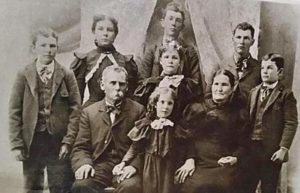
Henry Mitchel Bolingbroke
1850–1905
Brother of Charles Bolingbroke; husband of Mary Elizabeth Lusk
More about Henry
One of the first men to use the north end: by the family account he filed Rattlesnake Creek water rights in 1889, and the right that survives, decreed in 1907 to “John Bolingbroke,” carries a priority of April 1, 1892. No patent in his name has been found — his son John Henry proved up the home ranch in 1907. He returned to carpentry in Malad and served a mission in England from October 1900 (to 1902 by the family account, spring 1903 by the missionary register).
Mary Elizabeth Lusk Bolingbroke 1855–1929
Married · sister of Matilda Lusk Evans and probably of John W. Jr. and Perry Lusk
John Henry Bolingbroke 1875–1955
Married Beatrice Thomas Bolingbroke (1903)
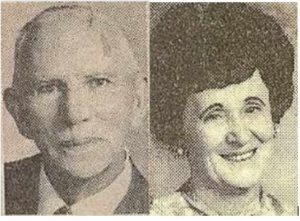
Ephraim Thomas “Eph” Bolingbroke 1904–1984
Married Zella Daniels Bolingbroke (1934)
Glen Ephraim Bolingbroke 1935–2012
Dale Alan Bolingbroke 1944–2017
John Henry Bolingbroke Jr. 1915–1973
Husband of Lois Berdena Davis (married 1937) and later of Ruth Adelia James
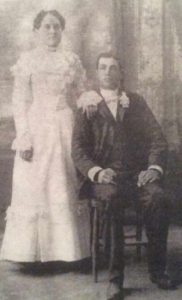
David Lusk Bolingbroke 1878–1945
Married Mary Ellen Thomas Bolingbroke (1900)
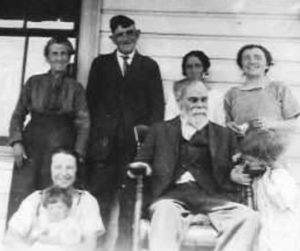
Charles Edward Bolingbroke
1853–1924
Brother of Henry Mitchel Bolingbroke; husband of Margaret “Maggie” Roberts (married 1876)
More about Charles
Farmed with as many as eighteen horses a day; known as “the cheese man” for his wife Maggie’s cheese. Their home was a stopping place for freighters and travelers.
Margaret “Maggie” Roberts Bolingbroke 1857–1943
Married 1876
Elizabeth E. “Lizzie” Bolingbroke Munn 1879–1901
Wife of Joseph Munn (married January 1, 1901); mother of LaVern Munn
LaVern “Vern” Munn 1901–1973
Grandson of Charles and Maggie Bolingbroke, who raised him (son of Lizzie Bolingbroke and Joseph Munn); husband of Carolyn Schneider (married 1932)
Minnie Jane Bolingbroke Steed 1884–1944
Wife of Franklin Richard “Dick” Steed (married 1914)
Charles Edward “Edward” Bolingbroke Jr. 1886–1969
Alfred Bolingbroke 1894–1978
Guy Bolingbroke 1901–1984
Married Hazel Stone Bolingbroke (1932)
Homesteads and land
6 places the Bolingbroke family took up or held, 1892–1945, placed from the land patents, the entry registers and the family accounts.
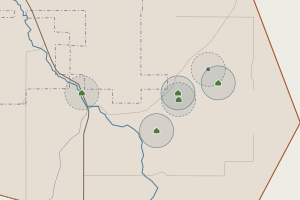 123456
Bolingbroke holdings
North end of the valley east of Pauline, toward Rattlesnake Creek; present Eph Lane lies inside the circle.
Henry M. and John H. Bolingbroke home ranch on Rattlesnake Creek (patent 1907)
The Bolingbroke home ranch on Rattlesnake Creek, patented to John Henry Bolingbroke in 1907: Lot 4 and SE¼SW¼ Sec. 7 and NE¼NW¼, NW¼NE¼ Sec. 18 T10S R34E. Henry’s one-room cabin still stood on “the John Bolingbroke place” in 1982. The state water-right record gives the right first held by “John Bolingbroke” an 1892 priority. The land was sold, probably to John Jr., in 1945.
David L. Bolingbroke place (“Uncle Dave’s place”; first entry 1907)
David L. Bolingbroke’s land east of John’s: NE¼NE¼ Sec. 7 and NW¼NW¼ Sec. 8 (desert-land entry 1907; cash patent 1911) and SW¼NW¼, E½NW¼, SW¼NE¼ Sec. 8 (homestead patent 1915), T10S R34E. Later part of Eph Bolingbroke’s farm.
Charles Bolingbroke on Bannock Creek
Charles Bolingbroke’s homestead on Bannock Creek, patented in 1908 in Sec. 11 and the SW¼ of Sec. 12 T10S R33E — just north and north-west of the Pauline school. A Bolingbroke cabin, possibly the first, survives north of the school.
Eph Lane
Eph Bolingbroke’s “lumber” home stands at the end of the lane named for him, probably on the NW¼SE¼ of Sec. 7 T10S R34E, within the 1909 cash purchase of “Mary E. Bolingbroke”; Eph’s farm was built from Uncle Dave’s place and the Joe Thomas and Hatch places.
Mary E. Bolingbroke’s cash purchase (patent 1909)
The 160 acres patented as a cash purchase to “Mary E. Bolingbroke” on December 1, 1909: W½SE¼ and S½NE¼ Sec. 7 T10S R34E, east of the John H. Bolingbroke home ranch. Whether she was Henry’s widow Mary Elizabeth or David’s wife Mary Ellen is unresolved. Eph Bolingbroke’s later house at the end of Eph Lane probably stood on its NW¼SE¼, and the 1897 water right of David and Mary E. Bolingbroke waters part of it.
61 dates in the family’s history
Every date the valley map shows when you follow the Bolingbroke family, era by era: the most telling of each era first, the rest a click away. Dates keep the sources’ own wording.
Homestead or landFamily historyEventValley firstTragedy
Before Homesteading
A Shoshone and Bannock homeland; trails, travelers and cattle range.
1851 (or about 1852)Family history
The Bolingbrokes leave England
Thomas John Bolingbroke’s family was still at Coventry at the census of March 1851. Henry’s own 1900 census entry says they came to America that year, but a family-tree entry points to late 1852 instead.
Thomas John Bolingbroke, Henry Mitchel Bolingbroke
1853–1864Family history
A decade at Savannah, Missouri
By January 1853 the family was living at Savannah, Andrew County, Missouri, and it stayed there about ten years before going west.
Thomas John Bolingbroke, Henry Mitchel Bolingbroke, Charles Edward Bolingbroke
June 26–September 20, 1864Family history
Across the plains with the John D. Chase company
The five Bolingbrokes crossed the plains in the John D. Chase wagon company, leaving Wyoming, Nebraska, on June 26 and reaching Salt Lake City on September 20, 1864. The family later settled at Malad.
Thomas John Bolingbroke, Henry Mitchel Bolingbroke, Charles Edward Bolingbroke
September 2, 1865Family history
Baptised at Logan
Henry, Charles and their brother Thomas Jr. were baptised as Latter-day Saints at Logan on September 2, 1865.
April 30–June 6, 1866Family history
Maggie Roberts sails from Liverpool
Eight-year-old Margaret Roberts sailed from Liverpool to New York on the John Bright with her parents, the Welsh weaver and branch president Edward Roberts and his wife Elizabeth, and her sister Jane, and went on with them to Utah.
August 1875Family history
Freighting from Corinne
In August 1875 a “Henry Bolingbrook,” possibly Henry M. Bolingbroke, loaded 14,000 pounds of freight at Corinne for Helena merchants.
June 1879Family history
Mary Bolingbroke in the first Malad Primary
When Eliza R. Snow organized the first Primary Association at Malad in 1879, Mary Bolingbroke, Henry’s wife, was named a counsellor.
Mary Elizabeth Lusk Bolingbroke
Early Claims
Possessory claims and water rights before the valley opened.
1884–1892Event
Possessory claims and water rights
Before the valley was formally opened to homesteading, settlers took up “possessory” claims — squatter’s rights — and filed on water. When homesteading opened they had to file again and prove up over five years. The oldest dated settler records are water rights on Rattlesnake Creek with a priority of April 1, 1892 (Daniels, Lusk and Bolingbroke), decreed in 1907; the family dates of 1884–89 have not been found in any record. Until the townships were surveyed in 1901 the only federal claim open was the desert-land entry, which Lorenzo Evans (1894) and Gertrude Daniels (1895) used.
1887Event
Daniels water right from West Fork (family account)
By the archive’s account David Daniels was granted a water right on the Bannock Creek drainage from the West Fork in 1887; under the arrangement it describes, tribal members holding 812 acres had first right, the Big Meadows owners (Bolingbroke, Lusk, Price) second, Dave Daniels third, and Henry Daniels and Tom Price a right dated 1891. No 1887 or 1891 Daniels or Price right appears in the decree records of the Bannock Creek Decree (United States v. Daniels, 1907). There the Shoshone-Bannock Tribes’ rights carry the oldest priorities, and the earliest settler priority is April 1, 1892, shared by the Daniels, J. W. Lusk and John Bolingbroke rights on Rattlesnake Creek.
1889Event
Bolingbroke and Lusk claims on Rattlesnake Creek
By the family accounts Henry Mitchel Bolingbroke and other settlers filed water rights on Rattlesnake Creek in 1889, before homesteading opened, and John Winters Lusk Jr. took a possessory claim and water rights the same year (1888 in the Lusk family’s own account). The rights that survive were decreed in 1907 with a priority of April 1, 1892 — “John Bolingbroke” on the Bolingbroke home ranch and “J. W. Lusk” on the Lusk Loop fields — the same priority as the Daniels right. The original ArbonValley.com places the Lusk claim in the Big Meadows of West Fork; all of the Lusks’ documented land and water lay at Lusk Loop.
1892Homestead or land
Bolingbroke holdings
North end of the valley east of Pauline, toward Rattlesnake Creek; present Eph Lane lies inside the circle.
Henry Mitchel Bolingbroke, John Henry Bolingbroke, Ephraim Thomas “Eph” Bolingbroke
1892Homestead or land
Henry M. and John H. Bolingbroke home ranch on Rattlesnake Creek (patent 1907)
The Bolingbroke home ranch on Rattlesnake Creek, patented to John Henry Bolingbroke in 1907: Lot 4 and SE¼SW¼ Sec. 7 and NE¼NW¼, NW¼NE¼ Sec. 18 T10S R34E. Henry’s one-room cabin still stood on “the John Bolingbroke place” in 1982. The state water-right record gives the right first held by “John Bolingbroke” an 1892 priority. The land was sold, probably to John Jr., in 1945.
Henry Mitchel Bolingbroke, John Henry Bolingbroke, Beatrice Thomas Bolingbroke
1890s Settlement
Homesteads, the first ditch, and the first winters.
1895Event
Stockmen settle the north end (later Pauline)
Latter-day Saint stockmen, among them the Daniels brothers, located at the north end of Bannock Valley “in 1895 and following years” (Jenson); the original ArbonValley.com account’s 1895 list also names Bolingbroke, Davis, Evans and Lusk families. Federal homestead entries at the future crossroads began in March 1901 (Thomas D. Daniels), and Pauline grew into a named crossroads with a store, post office and ward from 1911, on the roads to American Falls and Pocatello. The original ArbonValley.com account’s wider, undated list of “prominent first residents” adds the Nobles and Kowallises, who came in 1905 and 1909.
April 1, 1897 (priority)Family history
A second Rattlesnake Creek right
A Rattlesnake Creek water right with a priority of April 1, 1897, stands in the names of David and Mary E. Bolingbroke; its place of use takes in part of the 1909 Mary E. Bolingbroke land and the later Joe Thomas place.
just before 1900Event
Charles Bolingbroke settles on Bannock Creek
Charles Edward Bolingbroke and Margaret (“Maggie”) Roberts Bolingbroke of Malad settled on Bannock Creek near Pauline, on the homestead just north and north-west of the present school that was patented to Charles on October 19, 1908. Maggie made so much cheese for sale that Charles was known as “the cheese man.” Travelers hauling grain from the south end of the valley often stayed the night with them.
Charles Edward Bolingbroke, Margaret “Maggie” Roberts Bolingbroke
just before 1900Homestead or land
Charles Bolingbroke on Bannock Creek
Charles Bolingbroke’s homestead on Bannock Creek, patented in 1908 in Sec. 11 and the SW¼ of Sec. 12 T10S R33E — just north and north-west of the Pauline school. A Bolingbroke cabin, possibly the first, survives north of the school.
Charles Edward Bolingbroke, Margaret “Maggie” Roberts Bolingbroke
Early 1900s Growth
Schools, churches, stores and post offices in every area.
October 8, 1900Family history
Henry Bolingbroke’s mission to Britain
Henry M. Bolingbroke was set apart for the British Mission on October 8, 1900.
October 3, 1901Tragedy
Lizzie Munn dies of typhoid; her baby carried home on a pillow
A month after her son was born, Lizzie Bolingbroke Munn died of typhoid, and her three-pound baby was carried to his grandparents on a pillow.
1907Homestead or land
David L. Bolingbroke place (“Uncle Dave’s place”; first entry 1907)
David L. Bolingbroke’s land east of John’s: NE¼NE¼ Sec. 7 and NW¼NW¼ Sec. 8 (desert-land entry 1907; cash patent 1911) and SW¼NW¼, E½NW¼, SW¼NE¼ Sec. 8 (homestead patent 1915), T10S R34E. Later part of Eph Bolingbroke’s farm.
1909Homestead or land
Mary E. Bolingbroke’s cash purchase (patent 1909)
The 160 acres patented as a cash purchase to “Mary E. Bolingbroke” on December 1, 1909: W½SE¼ and S½NE¼ Sec. 7 T10S R34E, east of the John H. Bolingbroke home ranch. Whether she was Henry’s widow Mary Elizabeth or David’s wife Mary Ellen is unresolved. Eph Bolingbroke’s later house at the end of Eph Lane probably stood on its NW¼SE¼, and the 1897 water right of David and Mary E. Bolingbroke waters part of it.
June 1911Event
Meadow Ward at Pauline
In June 1911 the north part of the Arbon Ward was set apart as the Meadow Ward, with Wilhelm F. Kowallis — whose mother Pauline is said to have given the area its name — as first bishop, W. E. Dawson as clerk and Anna E. Lusk as first Relief Society president. It met in a T-shaped log meetinghouse which, by Andrew Jenson’s distances, stood on the main north–south road near Pauline or the Lusk Loop corner rather than in West Fork. Daniels, Lusk and Bolingbroke families attended; about half the area’s people were not Latter-day Saints. Later bishops were H. Perry Howell (1918–21) and Robert Wheatley (1921–29).
August 1912Tragedy
A toddler kicked by a work horse
Two-year-old Eldon Bailey followed his father into the farmyard, was kicked in the head by a work horse and died after an operation in Salt Lake City.
Show 6 more from these years
April 9, 1907Event
The Bannock Creek Decree
A federal court decree of April 9, 1907, United States v. Daniels, settled the water rights of Bannock Creek and its branches, and it still governs the creek. It gave the earliest settler priorities on Rattlesnake Creek — April 1, 1892 — to Thomas D. and Sarah Daniels, J. W. Lusk and John Bolingbroke: the oldest dated records of the Malad families’ use of the north end. The Idaho Department of Water Resources records the Shoshone-Bannock Tribes’ rights with an 1867 priority, older than any settler’s.
April 17, 1907Event
John Henry Bolingbroke proves up the home ranch
John Henry Bolingbroke received the homestead patent for the family’s Rattlesnake Creek place — Lot 4 and SE¼SW¼ of Sec. 7 and NE¼NW¼, NW¼NE¼ of Sec. 18, T10S R34E, 153 acres — on April 17, 1907. No patent to his father Henry, with whose claim it probably began, has been found. That August John also took a desert-land claim on the adjoining Lot 3 and NE¼SW¼ of Sec. 7, which he relinquished in May 1908.
1908 (family account); first entry a desert-land claim of August 9, 1907Event
Dave Bolingbroke homesteads east of his brother
David Lusk Bolingbroke and his wife Mary Ellen Thomas, sister of John Bolingbroke’s wife Beatrice, homesteaded a short distance east of John’s place. His first claim there was a desert-land entry of August 9, 1907 (cash patent 1911), followed by a homestead patented in 1915. The two families shared John’s two-room log house, kept green by a windmill, and took turns wintering in Malad for school.
September 30, 1908Family history
Judging at Farmers’ Day
At the American Falls Farmers’ Day of September 1908, “Mrs. David Bolingbroke, Arbon” judged the dairy products, preserves, pastries and house plants.
December 1, 1909Family history
Mary E. Bolingbroke buys 160 acres
A “Mary E. Bolingbroke,” either Henry’s widow Mary Elizabeth or David’s wife Mary Ellen, received a cash patent for 160 acres in Sec. 7 next to the home ranch. Eph Bolingbroke’s house at the end of Eph Lane probably stood on this land.
April 1910Family history
Three Bolingbroke households in the Arbon precinct
The 1910 census of the Arbon precinct listed the households of David, John H. and Charles Bolingbroke, with David’s next to John’s.
David Lusk Bolingbroke, John Henry Bolingbroke, Charles Edward Bolingbroke
Community Development
A new county, roads and phones — and the first departures.
July 1915Family history
On the county road crew
John Bolingbroke was among the valley men the county paid for road work in July 1915.
March 1917Family history
Bolingbroke Brothers, Percheron breeders
In March 1917 the American Falls Press described the Bolingbroke Brothers of Pauline as breeders of high-grade Percheron horses for four generations.
about 1918 (water wheel); home plants to the 1940sValley first
The first electric lights
Long before power lines reached the valley, George Bradley ran Rattlesnake Creek over a water wheel to make electric light for his ranch house.
January 22, 1918Family history
Alfred Bolingbroke’s draft classification
Charles’s son Alfred Bolingbroke appeared on Power County’s list of draft classifications in January 1918.
May – December 1921Tragedy
Two juries acquit W. H. Ball
Tried for the murder of Deputy Torrance and then for shooting Ed Brandt, Ball was acquitted both times, and the second verdict was attacked in the American Falls paper.
LaVern “Vern” Munn
1928 – about 1941Event
From horses to tractors
Families who had harnessed up to eighteen horses a day changed over: the Arbons bought their first gasoline tractor in 1928, the Bolingbrokes a Caterpillar in the early 1930s, the Lusks traded their horses for a Model M crawler in 1937 ($1,650), and Mark Andersen’s family bought its first tractor around 1941.
Show 11 more from these years
1915–1916Event
The Thomases homestead beside the Bolingbrokes
Joe T. Thomas (January 13, 1915) and Ephraim Thomas (July 7, 1915) received homestead patents beside the John Bolingbroke ranch in Secs. 7–8 of T10S R34E, and Joe added 40 acres in 1916. Ephraim’s tract was the one John H. Bolingbroke had taken as a desert claim in 1907 and relinquished; Joe’s land later became part of Eph Bolingbroke’s farm.
March 1918Family history
Back from Malad to the ranch
In March 1918 Dave and John Bolingbroke moved their families back to the ranch after wintering at Malad, and Alfred was helping his brother-in-law Lorin Bailey carry the mail between Arbon and Pocatello.
David Lusk Bolingbroke, John Henry Bolingbroke, Alfred Bolingbroke
September 1919; died June 1924Tragedy
Charles Bolingbroke thrown from his horse
When a gate frightened his horse, the Pauline pioneer Charles Bolingbroke was thrown, and he never walked again.
1919–1924Event
A state highway and a highway district
A state highway from Pocatello to Arbon was designated in 1919. Power County’s Independent Highway District No. 3 — J. E. Keeler chairman, William Allard secretary-treasurer (1919–24), G. M. Houk and Roy D. Lindley commissioners — called for bids to gravel fifteen miles of the Bannock Creek road in 1919, built six miles of new road and graded and graveled fourteen in 1920, and lost its cash in a bank failure in 1921. In April 1919 the county bought ground from a Bolingbroke to straighten the highway to the Pauline bridge. The Crystal Highway District, organized in 1918, drew complaints in 1924 about appointed officers and high taxes.
January 1920Family history
Wintering at Malad, managing at Pauline
In January 1920 Alfred Bolingbroke was counted at Pauline as a farm manager, while the households of Charles and Maggie, Henry’s widow Mary Elizabeth, John H. and David L. were all in their own houses in Malad for the winter.
Alfred Bolingbroke, Charles Edward Bolingbroke, Margaret “Maggie” Roberts Bolingbroke, Mary Elizabeth Lusk Bolingbroke and 2 more
June – July 1921Family history
Vern Munn testifies for the defence
LaVern Munn, the grandson Charles and Maggie Bolingbroke raised, testified for the defence at W. H. Ball’s murder trial in June 1921, aged nineteen, and was paid as a witness.
LaVern “Vern” Munn
November 1921Family history
The Steeds come home to Pauline
In November 1921 Charles’s daughter Minnie and her husband Dick Steed moved back from Crystal to their Pauline home.
Minnie Jane Bolingbroke Steed
1922Family history
Vern Munn buys the Lorin Bailey house
By the original ArbonValley.com account LaVern “Vern” Munn, the grandson Charles and Maggie raised, bought Lorin Bailey’s former house at Pauline in 1922 and farmed there until 1973.
LaVern “Vern” Munn
January 1923Family history
Standrod & Co. v. Bolingbroke
The Power County district court calendar for January 23, 1923, listed a suit, Standrod & Co. v. Bolingbroke. Which Bolingbroke was sued, and over what, is not known.
December 1923 – April 1924Family history
Another winter at Malad
In December 1923 John and Charles Bolingbroke and their wives went to Malad for the winter, followed by Alfred and Guy, who came back to Pauline in early April 1924.
John Henry Bolingbroke, Beatrice Thomas Bolingbroke, Charles Edward Bolingbroke, Margaret “Maggie” Roberts Bolingbroke and 2 more
autumn 1925Family history
A Bolingbroke teaches at Pauline
In the autumn of 1925 the upper grades of the Pauline school were taught by “Delbert Bollingbrook,” probably David’s son Delbert T. Bolingbroke, a recent Utah Agricultural College graduate.
Depression & Change
Drought, closures, tractors, electricity, the reservation boundary.
April 1930Family history
Alfred heads the Pauline household
In April 1930 Alfred Bolingbroke headed the household at Pauline, farming on his own account with his mother Margaret, his brothers Edward and Guy and his nephew LaVern Munn; the Steeds and J. H. Bolingbroke’s household were also at Pauline.
Alfred Bolingbroke, Margaret “Maggie” Roberts Bolingbroke, Charles Edward “Edward” Bolingbroke Jr., Guy Bolingbroke and 3 more
1932–1933Valley first
The first 4-H club and Grange
The earliest 4-H club found in the valley was at Pauline in 1932, and in 1933 William Allard chaired the committee that organized the Arbon Valley Grange.
January 1, 1935Tragedy
A car full of Arbon youngsters goes into the Portneuf
On New Year’s Day a car carrying Arbon young people skidded through a guard rail into the Portneuf River; the driver held two Davis girls above the water until help came.
1945Homestead or land
Eph Lane
Eph Bolingbroke’s “lumber” home stands at the end of the lane named for him, probably on the NW¼SE¼ of Sec. 7 T10S R34E, within the 1909 cash purchase of “Mary E. Bolingbroke”; Eph’s farm was built from Uncle Dave’s place and the Joe Thomas and Hatch places.
1945 or 1947 (accounts differ; Buist about 1947)Event
Electric power arrives
Through the Rural Electrification program, power reached Arbon Valley in 1945 (the Eph Bolingbroke page) or 1947 (Zella Bolingbroke’s original text in Bannock Valley), and the Buist area about 1947. Families who had relied on coal-oil lamps, a Delco plant, wind chargers — or, at the Bradley ranch, a water wheel on Rattlesnake Creek — now bought electric stoves and refrigerators.
1948 (Buist end); about 1959 up the valley by one accountValley first
The first oiled road
The earliest oiled road on record is State Highway 37 between Holbrook summit and Buist, let for a crushed-rock road with a bituminous surface in August 1948; the Buist history dates the oiling of the valley road up to the Crystal turn about 1959.
Show 6 more from these years
after 1934Family history
Eph and Zella build their farm
From 1934 Eph and Zella Bolingbroke built a cattle and wheat farm out of “Uncle Dave’s place,” the Joe Thomas place and a Hatch homestead, with their house at the end of what is now Eph Lane.
Ephraim Thomas “Eph” Bolingbroke, Zella Daniels Bolingbroke, David Lusk Bolingbroke
1940–1942Family history
Bolingbroke men register at Arbon
Eph Bolingbroke, his brother John H. Jr., their cousins Guy, Edward and Alfred, and Charles’s grandson LaVern Munn all registered for the draft at Arbon in 1940–42.
Ephraim Thomas “Eph” Bolingbroke, Guy Bolingbroke, Charles Edward “Edward” Bolingbroke Jr., Alfred Bolingbroke and 2 more
November 1941 – May 1942Family history
Guy’s family winters at Malad
Guy and Hazel Bolingbroke’s family spent the winter of 1941–42 at Malad and came back to their Arbon farm in May 1942.
August 1942Family history
With the Reorganized church at Malad
Mr. and Mrs. D. L. Bolingbroke attended the house-warming of the Reorganized church’s Ladies’ Aid at Malad in August 1942; Beatrice Bolingbroke was still a member of that church in 1960.
David Lusk Bolingbroke, Mary Ellen Thomas Bolingbroke, Beatrice Thomas Bolingbroke
1945Family history
John H. retires and John Jr. takes the home ranch
John H. and Beatrice Bolingbroke farmed in Arbon Valley until 1945, when they retired to Pocatello; by Zella Bolingbroke’s account their son John H. Jr. took over the home ranch on Rattlesnake Creek.
John Henry Bolingbroke, Beatrice Thomas Bolingbroke, John Henry Bolingbroke Jr.
fall 1948Tragedy
The Bolingbroke log house burns
Guy and Hazel Bolingbroke’s log house near the Pauline store burned while the family was living in Pocatello for the children’s schooling; only the piano was saved.
Generations
Fewer, larger farms; descendants on the old homesteads.
April 1950Family history
Two Bolingbroke houses on the Pauline road
The 1950 census counted John H. Bolingbroke Jr.’s family in the third house on the Pauline road and Eph’s in the fourth.
John Henry Bolingbroke Jr., Ephraim Thomas “Eph” Bolingbroke
1952Event
The first television in the valley
Dwight Zundel of Pocatello brought a test set out to Eph and Zella Bolingbroke’s home and picked up a Salt Lake City station — the first television in the valley. Neighbors came to watch for weeks. In 1958 the family had the valley’s first color set.
September 12, 1961Family history
Eph files for irrigation wells
Eph Bolingbroke filed for ground-water rights on September 12, 1961, to irrigate the farm.
1965Event
Party lines give way to dial phones
Joe Arbon, with Sod Williams and Claude Gibbons, raised $200 subscriptions from about thirty valley families to replace the barbed-wire lines and crank phones with a modern dial system; until then calls went through Gena Newport’s switchboard in the old Evans house. Claude J. Gibbons’s own obituary independently credits him with writing to telephone companies until one agreed. (Buist had moved off crank phones in 1952.)
Follow the Bolingbroke family on the timeline: all 61 dates ↗
Firsts and tragedies
The valley firsts the Bolingbroke family had a hand in, and the hard times it lived through, most remembered first.
What they built
Early water rights
The family’s Rattlesnake Creek right — filed in 1889 by the family account — carries a decreed priority of April 1, 1892 (original owner “John Bolingbroke”), the joint-earliest settler priority in the 1907 Bannock Creek Decree; the original ArbonValley.com adds that the Big Meadows owners, including Bolingbrokes, held second rights to West Fork water.
Cattle and dairy
John Henry raised beef and dairy cattle, selling cream to a Pocatello creamery; Eph added neighboring places and raised cattle and hay.
Hospitality and baseball
Charles and Maggie hosted freighters and young people; Alfred and Guy anchored the valley baseball team that played towns from American Falls to Malad.
The valley’s first television
In 1952 a test set brought out from Pocatello to Eph and Zella Bolingbroke’s home picked up a Salt Lake City station — the valley’s first television.
Photographs
Portraits and family groups first. Each opens with its caption, date and where it came from.
Charles sitting in chair, Maggie standing by window on left.Date unknown Photograph from Henry Mitchel BolingbrokeDate unknown
 Photograph from Guy BolingbrokeDate unknown
 Photograph from John Henry BolingbrokeDate unknown
 David Lusk and Mary Thomas BolingbrokeDate unknown
 Eph and Zella BolingbrokeDate unknown
 Dale BolingbrokeDate unknown
 George and Mary Daniels with their childrenDate unknown
9 PHOTOGRAPHS · 6 FAMILY TREESOpen the Bolingbroke family album ↗
Sources and open questions
Everything above comes from the archive’s family histories and the public records the valley map checked them against. Where accounts disagree, the page says so rather than choosing silently.
Where the accounts differ
- Charles’s arrival is given only as “just before the turn of the century.”
- The family’s emigration year: 1851 by Henry’s own 1900 census entry, or after August 1852 by an unsourced family-tree entry.
- Who bought John Henry Bolingbroke’s ranch in 1945: his son John Jr. by Zella Bolingbroke’s own account, Eph by another archive page.
- Which Mary E. Bolingbroke — Henry’s widow or David’s wife — bought the 1909 cash land next to the ranch.
- Charles’s day of death: June 20, 1924 (death index) or June 21 (press); the funeral was on June 22.
Sources 22
Show every source
- BolingbrokeJacob Andersen · posted 2018
- Charles BolingbrokeMelinda Campbell · posted 2019
- Guy BolingbrokeMelinda Campbell · posted 2019
- Henry Mitchel BolingbrokeMelinda Campbell · posted 2019
- David Lusk BolingbrokeMelinda Campbell · posted 2019
- John Henry BolingbrokeMelinda Campbell · posted 2019
- Ephraim Thomas BolingbrokeMelinda Campbell · posted 2019
- The original homesteading families map (2019)
- Arbon map with family names (earlier version, 2018 upload)
- IDWR water-right report 29-476: “John Bolingbroke”, Rattlesnake Creek, priority April 1, 1892 (Bannock Creek Decree, 1907)Idaho Department of Water Resources
- Homestead patent to John Bolingbroke, April 17, 1907 (BLM IDIDAA 015096): Lot 4, SE¼SW¼ Sec. 7; NE¼NW¼, NW¼NE¼ Sec. 18 T10S R34E, 153.07 acres; certificate 5131U.S. General Land Office (Bureau of Land Management records)
- Homestead patent to Charles E. Bolingbroke, October 19, 1908 (BLM IDIDAA 005117): Sec. 11 and Sec. 12 SW T10S R33E, 160 acresU.S. General Land Office (Bureau of Land Management records)
- Cash-entry patent to Mary E. Bolingbroke, December 1, 1909 (BLM IDBL 0001340): W½SE¼, S½NE¼ Sec. 7 T10S R34E, 160 acresU.S. General Land Office (Bureau of Land Management records)
- Cash-entry patent to David L. Bolingbroke, December 4, 1911 (BLM IDBL 0000563): NE¼NE¼ Sec. 7; NW¼NW¼ Sec. 8 T10S R34E, 80 acres; desert-land entry of August 9, 1907U.S. General Land Office (Bureau of Land Management records)
- Homestead patent to David L. Bolingbroke, February 26, 1915 (BLM IDBL 0010714): SW¼NW¼, E½NW¼, SW¼NE¼ Sec. 8 T10S R34E, 160 acresU.S. General Land Office (Bureau of Land Management records)
- NARA M1620 reel 4, Blackfoot land office register of homestead entries 1897-1908 and desert-land abstractNational Archives (RG 49, General Land Office)
- 1900 U.S. census, Oneida County, Idaho, EDs 92–93, Malad precinct
- Church History Biographical Database: Henry Mitchell Bolingbroke (1850), John D. Chase Company 1864 and British Mission 1900Church History Department
- Saints by Sea: voyage of the John Bright, Liverpool to New York, April 30–June 6, 1866 (Edward Roberts family)BYU, Saints by Sea
- Henry Bolingbroke (FamilySearch document; from Bannock Valley)Zella Daniels Bolingbroke, in Laurie Jean Ward, Bannock Valley (1982), pages 177–178
- Salt Lake Tribune, January 9, 1960, page 24: obituary of Mrs. Beatrice Bolingbroke (John H. died June 1955)
- Obituary – Dale Bolingbrokeposted 2017
Research notes
- Charles’s homestead patent (1908) lies in Sec. 11 and Sec. 12 SW¼ T10S R33E, just north and north-west of the school, matching the “about a mile north” page; the “about a mile east” page fits John H. Bolingbroke’s home ranch instead. Both family-map versions put the circle further east, around Eph Lane.
- No patent to Henry M. Bolingbroke has been found; the home ranch was patented to his son John Henry in 1907, and the family’s Rattlesnake Creek right was decreed to “John Bolingbroke.”
- Mary Elizabeth Lusk Bolingbroke was born in Utah, not Wales; her parents were born in Illinois and Tennessee.
- Part of the family belonged to the Reorganized Church (Beatrice; David L. and Mary Ellen; Gerald and Dale).
- A family story credits LaVern Munn with giving land for the Pauline school; it cannot refer to the 1913 two-room school (he was twelve) and is unverified.